
Suppose, you’re at your local hospital. Your phone shows no cellphone reception – zero bars. But there’s a public Wi-Fi network, open and unencrypted. You need to message your family, check test results, or even pay a bill. Anyone sitting in the same waiting room – a malicious middleman or just a nosy eavesdropper – could intercept everything you type. Your passwords, your private messages, your medical info. What do you do?
You open your VPN app. One tap. Now your data travels through an encrypted tunnel. The public Wi-Fi becomes safe. That’s not a crime. That’s smart self-defense.
This is one of countless legitimate uses of a VPN. Yet some people ask, “Is using a VPN illegal?” Let me answer that once and for all – using a VPN is not illegal. And by the end of this article, you’ll have every logical proof, real-world example, and powerful analogy to explain why.
First, Understand What is a VPN
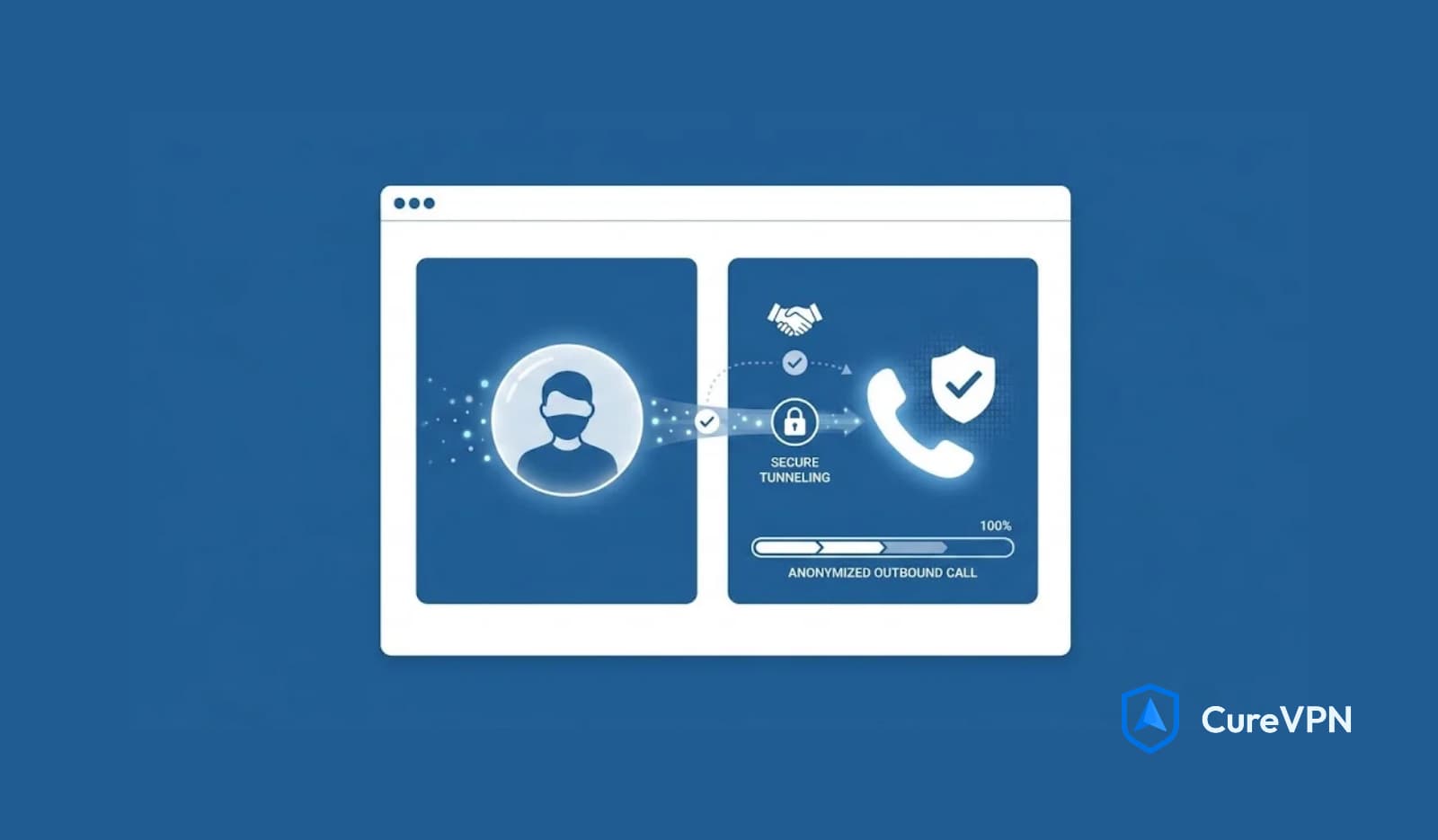
Before diving deeper, let’s quickly cover what is a VPN. A Virtual Private Network (VPN) is a technology that creates a secure, private connection over the public internet. It encrypts your data and masks your IP address. It’s not a “hacker tool” or a criminal device. It’s a security and privacy tool for human betterment – used by individuals, businesses, and even governments.
Think of it as a guard standing watch against unauthorized access. Hackers try to break into your connection; a VPN blocks them. That’s all.
Direct Answer: A VPN is a Tool, Not a Crime
A VPN has plenty of legitimate uses: securing data on public Wi-Fi, enabling remote work, protecting corporate networks. It isn’t just used by individuals – big businesses and governments rely on VPNs daily. Many companies use a VPN to securely connect to their private networks and access internal resources.
Yes, some people misuse VPNs to get around restrictions. But the technology itself is innocent. It depends on the person using it.
Let me prove this with analogies so clear that no one can argue.
Analogy #1: Guns
Banning VPNs because criminals use them is like banning guns because criminals use them. Should we outlaw all guns because a few people commit crimes? Of course not. Legal gun owners use them for hunting, sport, and self-defense – just as legal VPN users protect their privacy.
Analogy #2: Basements
It’s like saying that because some criminals make drugs in their basements, we should make it illegal to have basements. That’s absurd. A basement is just a space. A VPN is just a protocol.
Analogy #3: Kitchen Knives
If I have a knife, I could either cook a delicious meal or I could kill someone. Should I not be allowed to own a knife just because it can be used for violence? No. The same logic applies to VPNs.
Analogy #4: Clothes
Someone once asked me, “How is it legal to sell a service that literally hides what you’re doing from the government?” My response: Clothes aren’t illegal because they hide things from the government. Privacy is not a crime.
Analogy #5: Your Bank Account
When you access your bank account online, you use encryption to stop your passwords and data from being stolen. That’s exactly what a VPN does – just for your entire web browsing instead of just your banking session. Should we ban encryption? Then we’d have to ban online banking too.
Real-World Examples: Legitimate Uses Everywhere
VPNs are legal because they have legitimate business and personal uses that long predate consumer privacy apps.
Example 1: Hospital Wi-Fi (Again)
I already mentioned the hospital scenario. Let me repeat it with full detail: “When I’m at my local hospital, where I have no cellphone reception, but there’s a public unencrypted WiFi, a VPN secures my phone against malicious middlemen or even just nosy eavesdroppers.” That’s not a crime – that’s basic cybersecurity.
Example 2: Connecting Two Computers Securely
I use a VPN called Tailscale to connect two computers over the internet securely. I’m not hiding from law enforcement; I’m creating a safe tunnel between devices I own.
Example 3: What You’d Lose Without VPNs
Imagine eliminating VPNs completely. You’d have to get rid of TeamViewer (which millions use for remote support), expose NGOs to surveillance, and endanger dissidents in dictatorships. People couldn’t see worldwide news that their own governments censor. That’s precisely why places like Russia, North Korea, and China don’t like VPNs – not because VPNs are evil, but because they empower citizens.
Example 4: The Armenia Illusion – VPNs Don’t Hide Activity, They Obfuscate Location
One of the most important distinctions: VPNs don’t hide your activity. They obfuscate where the activity is happening. Huge difference.
Here’s a real example: I’m using a VPN right now as I write this article. This article is publicly visible. My activity is not hidden at all. However, because I’m using a VPN, it looks like I’m posting from Armenia. I’ve never been to Armenia, but that’s where my connection appears to originate. That’s it. No crime. No conspiracy. Just privacy.
Privacy is a Fundamental Human Right
For those countries that ban or restrict VPNs, a basic question arises: Why should it be illegal to hide what we’re doing from the government or from snoopers? Online privacy is a fundamental human right in this digital era. Ideally, no government has any right to know what you’re doing – whether in physical space (“meatspace”) or online – without proper legal justification.
Unfortunately, many governments have made it far easier over the years to spy on citizens in the name of “national security.” Some don’t even follow their own laws, facing no consequences for overreach. Free and paid VPNs give us the option to take some of our privacy back. (Later we’ll discuss the best free VPN services – but always choose reputable ones.)
Even in Restricted Countries, VPNs Can Be Legal with Authorization
This is where the strongest proof lies. Even countries that heavily restrict the internet still allow VPN usage under specific, lawful conditions. The issue is never the VPN itself – it’s unauthorized or misused VPNs.
Think of it like a driver’s license. Driving a car isn’t illegal, but driving without a license or breaking traffic laws is. Similarly, using an unapproved VPN in a restricted country may violate local rules – but that doesn’t make VPNs globally illegal. In fact, the very existence of government-approved VPN services proves that VPNs are a neutral technology.
Let’s examine the facts country by country.
China: Licensed VPNs for Businesses
China operates the Great Firewall. Even though VPNs are technically legal, most consumer VPNs are blocked. However, the Chinese government licenses specific VPN providers that comply with its terms. These licensed enterprise VPNs are allowed under government supervision – for multinational companies, foreign journalists, and banks. If VPNs were purely illegal, China would have no reason to issue such licenses.
Russia: Blocking Providers, Not the Technology
Russia hasn’t banned VPNs outright. It blocks providers that refuse to follow local censorship laws. In 2024, Russia ordered nearly 100 VPN apps removed from app stores for allowing access to “illegal” content. Yet government-approved VPNs and corporate remote access remain legal. Again: banning certain providers, not the technology.
Iran: Government Permits Required
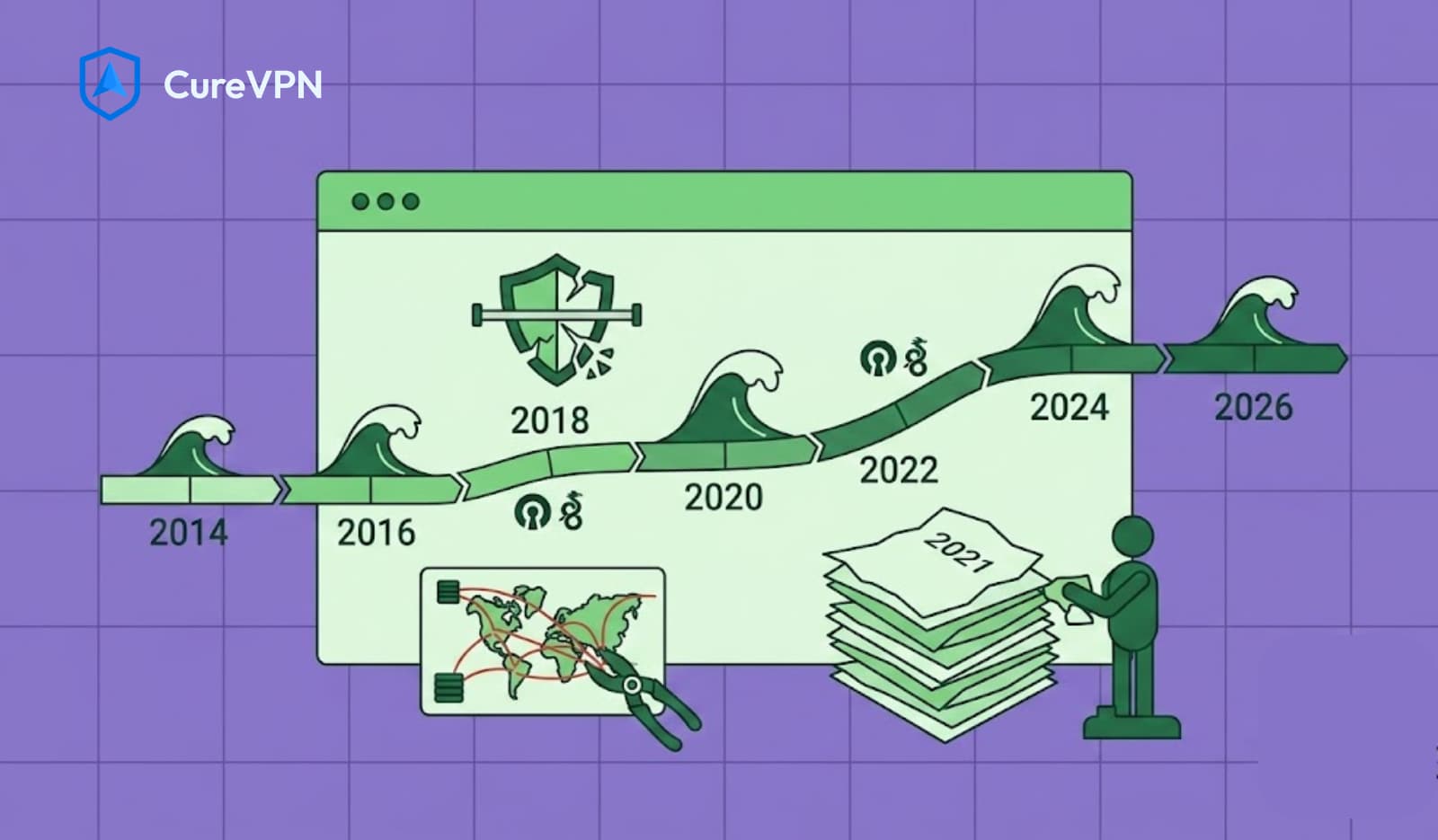
Iran has restricted unauthorized VPNs since 2013. Both providers and users must obtain government permits. Using an unlicensed VPN can lead to fines or imprisonment. But licensed VPNs exist – for businesses, government entities, and approved organizations. The permit requirement acknowledges legitimate VPN use.
United Arab Emirates (UAE): Highest VPN Usage, Conditional Legality
The UAE has the highest VPN download rate in the world – 4.27 million downloads, 43% of the population. Why? Because websites violating Islamic norms are banned, as are services like WhatsApp, Skype, FaceTime, and Facebook Messenger. Residents turn to VPNs for everyday communication.
Under Federal Decree-Law No. (34) of 2021, it is an offence to use a VPN for illegal purposes – committing a crime or concealing your IP to access blocked content. Penalties include fines from Dh500,000 to Dh2 million and imprisonment. Notice the key phrase: “for illegal purposes.” This law does not ban VPNs; it bans misuse. That’s exactly the same principle applied to knives, cars, or any legal tool.
Saudi Arabia, Qatar, and Oman
- Saudi Arabia: VPNs are legal but monitored. Using them for blocked content may lead to ISP throttling. Developers offering messaging app development in Saudi Arabia must consider local laws – but VPNs themselves are not banned.
- Qatar: Conditional legality with penalties for misuse.
- Oman: Personal VPN use prohibited since 2010; corporate use requires approval from the Telecommunications Regulatory Authority (TRA). Steep fines for unapproved use. Even here, VPNs are legal for authorized organizations.
What This Proves
Across all these examples – China, Russia, Iran, UAE, Saudi Arabia, Qatar, Oman – no country has banned the technology of VPNs outright. Instead, they regulate how, by whom, and for what purpose a VPN can be used. Government-approved VPN services exist precisely because VPNs have legitimate, essential functions.
So if anyone claims “VPNs are illegal,” simply point to China’s licensed enterprise VPNs, the UAE’s massive legal VPN downloads, or Oman’s TRA-approved corporate VPNs. These are not loopholes – they are official acknowledgements that VPNs are legitimate when used responsibly.
VPN Features That Make Them Indispensable for Lawful Use
Let’s talk about VPN features that legitimate users rely on every day:
- Encryption: Protects your data on public Wi-Fi (airports, cafes, hospitals – like my earlier story).
- IP Masking: Hides your real location – not for crime, but to prevent advertisers and snoops from tracking you.
- Kill Switch: Automatically disconnects your internet if the VPN drops, preventing data leaks.
- Split Tunneling: Lets you choose which apps go through the VPN and which use your regular connection – useful for banking locally while browsing internationally.
- No-Logs Policy: Reputable VPNs don’t store your activity. This isn’t about hiding from the law; it’s about preventing data breaches.
Businesses, journalists, activists, and ordinary parents rely on these features daily.
The VPN Industry: Legitimate and Thriving – Including White Label VPN Development
The very existence of White Label VPN Development as a professional field proves the industry’s legitimacy. White label VPN development allows entrepreneurs and companies to launch their own branded VPN services without building the entire infrastructure from scratch. A white label VPN provider supplies the servers, protocols, and apps; you add your logo, pricing, and marketing. This is a standard, legal business practice – just like white label software in any other SaaS industry.
Companies invest millions in VPN development – building robust WireGuard, OpenVPN, and IKEv2 protocols, creating global server networks, and ensuring compliance with data protection laws like GDPR. These aren’t “criminal enterprises.” They are tech businesses serving millions of paying customers who simply want security and privacy.
And for those looking for no-cost options, there are best free VPN services available – but always choose reputable ones (like ProtonVPN’s free tier) that don’t sell your data. Free services with no logs and transparent privacy policies are legitimate tools, not illegal loopholes.
Conclusion: Don’t Blame the Tool – And Yes, You Can Use a VPN with Confidence
We started with a story – a hospital, no cell signal, unencrypted Wi-Fi, and a VPN that protected everything. That story happens thousands of times every day. It’s not illegal. It’s not shady. It’s smart.
We’ve walked through nine powerful analogies: guns, basements, knives, clothes, bank encryption, guards, driver’s licenses, cars, and even the Armenia obfuscation illusion. We’ve seen real examples – from Tailscale to TeamViewer to dissidents in dictatorships. We’ve examined six countries (China, Russia, Iran, UAE, Saudi, Oman) and found that every single one allows authorized VPN use. No nation has banned the technology itself.
A VPN is just a tool. Like a knife, you can cook a meal or cause harm. Like a car, you can drive legally or recklessly. Like a basement, you can store family heirlooms or cook meth. The tool does not define the act. The user does.
So, is using a VPN illegal? Absolutely not. It is legal, it is ethical, and in many cases – like that hospital waiting room – it is essential for your safety.
Now go ahead. Use a VPN. Protect your privacy. And when someone asks you why, send them this article.