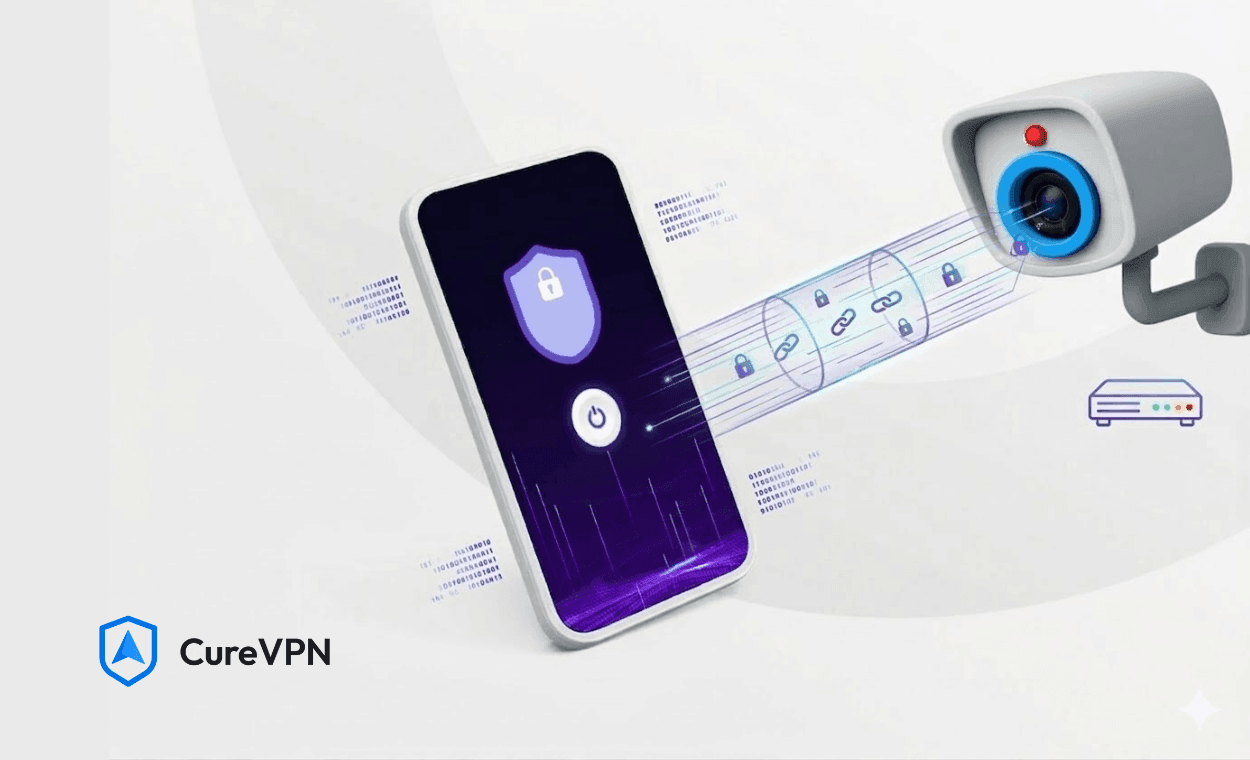


Not every privacy situation calls for a full VPN tunnel. Sometimes you need something faster, lighter, and smart enough to encrypt only the traffic that matters. That is exactly what the Shadowsocks VPN protocol was built to do, and after more than a decade of refinement, it remains one of the most capable proxy protocols available for bypassing censorship, securing specific traffic streams, and building lightweight privacy tools.
Shadowsocks started as a personal project by a Chinese developer in 2012. Since then, it has grown into a widely maintained open-source protocol used by developers, businesses, and individuals across restricted networks worldwide. The 2022 Edition of the protocol represented a complete architectural overhaul, addressing known vulnerabilities, dropping obsolete cryptography, and introducing full replay protection.
This guide covers how the Shadowsocks VPN protocol actually works, what the 2022 Edition changed, how it compares to other leading protocols in 2026, and which real-world scenarios it is genuinely built for.
Shadowsocks is not a full VPN. It is a proxy protocol designed for selective traffic encryption and censorship circumvention. Understanding that distinction helps you deploy it correctly.
What Is the Shadowsocks VPN Protocol?
The Shadowsocks VPN protocol is an open-source, SOCKS5-based proxy protocol that encrypts selected traffic between a client and a remote server. Unlike traditional VPNs that tunnel all device traffic, Shadowsocks encrypts only the traffic you configure it to handle, leaving other connections unaffected.
This selective approach has two direct benefits. First, it preserves overall network speed because your device is not routing every byte through a remote server. Second, it makes the encrypted traffic harder to identify because there is no obvious ‘this device is using a VPN’ signal to trigger deep packet inspection filters.
The protocol operates over both TCP and UDP, supports modern AEAD encryption ciphers, and runs on every major platform including Windows, macOS, Linux, Android, and iOS. Its lightweight footprint makes it particularly effective on mobile devices and in bandwidth-sensitive environments.
VPN Crafter regularly integrates the Shadowsocks VPN protocol into custom VPN applications and white-label solutions for clients who need censorship circumvention built directly into their product. If you are evaluating which protocol fits your deployment, understanding Shadowsocks at a technical level is the right starting point.
7 Essential Things You Must Know About the Shadowsocks VPN Protocol
1. It Is a Proxy Protocol, Not a Full VPN
This distinction matters more than most guides acknowledge. A traditional VPN routes all traffic from your device through an encrypted tunnel, including background app data, system calls, and every browser request. Shadowsocks routes only the traffic you specify.
For users trying to access geo-restricted content or bypass censorship on specific services, this is actually an advantage. The unaffected traffic continues at full speed, while the protected traffic moves through the encrypted proxy channel. That combination of speed and targeted privacy is exactly what makes Shadowsocks popular for streaming, accessing blocked platforms, and operating across restricted networks.
People who need VPN for Travel situations, particularly in countries with heavy internet filtering, often find Shadowsocks more reliable than standard VPNs because its traffic pattern is harder to block. Deep packet inspection systems that identify and drop OpenVPN connections frequently cannot distinguish Shadowsocks traffic from ordinary HTTPS.
2. The 2022 Edition Is a Complete Rebuild
The Shadowsocks 2022 Edition, defined in SIP022, is not a minor update. It is a full architectural redesign of the protocol that addresses well-known issues in the previous AEAD edition from 2017.
Key changes in Shadowsocks 2022:
- Replaced HKDF_SHA1 key derivation with BLAKE3, which is faster and cryptographically stronger
- Mandates full replay protection — every message has a unique type and cannot be repurposed
- Requires a cryptographically secure pre-shared key (PSK) directly, eliminating the EVP_BytesToKey function used in older versions
- Session-based UDP relay with unique session IDs significantly reduces protocol overhead
- Standalone header chunks added to request and response streams protect against replay attacks
- Traffic is indistinguishable from a random byte stream, defeating DPI-based censorship systems
- Payload cap increased from 16,383 bytes (0x3FFF) to 65,535 bytes (0xFFFF), improving throughput
If you are deploying Shadowsocks in 2026, the 2022-blake3-aes-128-gcm or 2022-blake3-aes-256-gcm methods are the correct choice. These are mandatory for all compliant 2022 implementations.
3. AEAD Ciphers Are Non-Negotiable for Security
AEAD stands for Authenticated Encryption with Associated Data. AEAD ciphers simultaneously provide confidentiality, integrity, and authenticity in a single operation. This is fundamentally different from older stream ciphers that only encrypted data without verifying its integrity.
The recommended AEAD ciphers in Shadowsocks are:
| Cipher | Key Size | Best For | Hardware Acceleration |
| AEAD_CHACHA20_POLY1305 | 256-bit | Mobile devices, software-only environments | No (optimized in software) |
| AEAD_AES_128_GCM | 128-bit | Servers and devices with AES hardware | Yes |
| AEAD_AES_256_GCM | 256-bit | Maximum security, enterprise deployments | Yes |
| 2022-blake3-aes-128-gcm | 128-bit | Shadowsocks 2022 recommended standard | Yes |
| 2022-blake3-aes-256-gcm | 256-bit | Shadowsocks 2022 high-security option | Yes |
All compliant Shadowsocks implementations must support AEAD_CHACHA20_POLY1305. Devices with hardware AES acceleration should also implement AES_128_GCM and AES_256_GCM. Never use the ‘none’ encryption method — traffic is transmitted as plain text and offers zero protection on any network.
4. Shadowsocks Handles TCP and UDP Differently
Understanding the TCP and UDP behavior of Shadowsocks helps you configure it correctly for different traffic types.
TCP traffic in Shadowsocks uses an encrypted stream model. Each session starts with a randomly generated salt that derives a per-session subkey using HKDF_SHA1 (legacy) or BLAKE3 (2022 Edition). Data is encrypted in chunks, each with its own length and payload tag. This structure makes the traffic indistinguishable from random data to any observer.
UDP traffic historically had a performance challenge: key derivation consumed roughly 50% of packet processing time because each packet required a fresh salt and subkey. The 2022 Edition addressed this directly through session-based UDP relay. Each relay session gets a unique session ID used as salt for key derivation, eliminating the per-packet overhead and dramatically reducing latency for UDP-heavy workloads like gaming and real-time communication.
5. Multi-User Support Is Built Into the 2022 Edition
Shadowsocks 2022 introduced Extensible Identity Headers (EIH), which enable multi-user support on a single server port. Each user has a separate key. The EIH is encrypted using AES-128 or AES-256 with a BLAKE3-derived identity subkey, letting the server identify which user a connection belongs to without exposing individual credentials.
This feature matters for free VPN for small business deployments where multiple team members share proxy infrastructure. Previously, running Shadowsocks for a team required either separate ports per user or accepting that all users shared one credential. The 2022 EIH approach solves that cleanly without additional complexity.
Enterprise deployments benefit from this because access control, logging, and bandwidth monitoring can operate at the individual user level, not just the server level.
6. Detection Resistance Is Strong But Not Absolute
Shadowsocks 2022 traffic is indistinguishable from a random byte stream to deep packet inspection systems. There are no identifiable headers, no recognizable handshake patterns, and no TLS fingerprint to match. This is a meaningful advantage over standard VPN protocols, which DPI systems can identify reliably.
That said, Shadowsocks is not completely invisible to every detection method. Some advanced censorship systems use active probing — they send crafted requests to suspected proxy servers to check whether the server responds in ways that reveal its nature. A correctly configured Shadowsocks 2022 server handles this by not responding to probes in any identifiable way, but the server IP address itself can still be blocked once identified through traffic analysis.
For users in high-censorship regions where this is a concern, combining Shadowsocks with obfuscation plugins like obfs4 or using it within platforms like Sing-box that add additional traffic camouflage layers provides stronger protection. The VPN for Privacy requirements in restrictive environments often demand layered approaches rather than a single protocol.
7. Deployment Is Simpler Than Most Developers Expect
A basic Shadowsocks server configuration is a single JSON file. It defines the server address, port, encryption method, and pre-shared key. The entire file can be as short as six lines. That simplicity is one reason Shadowsocks has such wide adoption — developers can get a working server running in under 30 minutes.
The 2022 Edition added one important requirement: the PSK must be a cryptographically secure random key generated with a tool like openssl rand -base64 rather than a human-chosen password. This closes a security gap present in older deployments where weak passwords reduced the effective security of AES-256 encryption to whatever the password entropy actually was.
For teams building custom VPN applications on Windows, Shadowsocks integrates cleanly into the stack and works well as the underlying proxy layer. VPN Crafter’s Best VPN for Windows development projects frequently use Shadowsocks as the protocol layer when clients need fast, reliable censorship circumvention with minimal user overhead.
Shadowsocks VPN Protocol vs Other Protocols: 2026 Comparison
Choosing a protocol means understanding what each tool was built to do. Shadowsocks, OpenVPN, WireGuard, and V2Ray serve different needs. Here is the honest picture.
| Feature | Shadowsocks 2022 | WireGuard | OpenVPN | V2Ray/VLESS |
| Traffic Scope | Selected traffic (proxy) | All traffic (VPN tunnel) | All traffic (VPN tunnel) | Selected or all (configurable) |
| Speed | High — low overhead | Highest — UDP-native | Moderate — high CPU use | High — protocol-dependent |
| DPI Resistance | Strong — random byte stream | Weak — identifiable UDP | Low — detectable pattern | Strongest — Reality mimics HTTPS |
| Encryption | AEAD (AES-GCM, ChaCha20) | ChaCha20-Poly1305 | AES-256-CBC/GCM | AES-256-GCM, ChaCha20 |
| Setup Complexity | Simple JSON config | Simple config file | Complex PKI setup | Moderate to complex |
| Mobile Performance | Excellent — low CPU | Good | Poor — high battery drain | Good |
| Replay Protection | Full (2022 Edition) | Built-in | Limited | Full (VLESS+Reality) |
| Multi-user Support | Yes (EIH in 2022) | Yes (peers) | Yes (certificates) | Yes (user emails) |
| Best Use Case | Censorship bypass, selective encryption | Enterprise VPN, fast tunneling | Legacy enterprise, broad compatibility | High-censorship regions |
WireGuard is the fastest option for full-tunnel VPN scenarios. Its UDP-native design and lean codebase produce measurably lower latency than OpenVPN. However, WireGuard traffic is easy to identify and block. For users in regions where Free VPN Service or paid VPN connections are actively blocked by ISPs or government filtering, Shadowsocks 2022 offers better practical reliability even if its raw throughput is slightly lower.
OpenVPN remains relevant in enterprise environments where legacy infrastructure requires it. Its broad compatibility and extensive certificate-based access control make it suitable for corporate Best VPN for Windows deployments where security auditing requirements are strict. For new projects, WireGuard or Shadowsocks are better starting points.
V2Ray with VLESS+Reality offers the strongest detection resistance of any protocol currently available. It is the right choice for users in the most restrictive environments. Shadowsocks 2022 covers the large middle ground: fast, lightweight, resistant to most DPI systems, and far simpler to deploy than a full VLESS+Reality stack.
Real-World Use Cases: When Shadowsocks Is the Right Choice
Streaming and Content Access
Travelers trying to access content from their home country run into geo-blocking regularly. A VPN for Travel that uses Shadowsocks as its underlying protocol handles this well because the traffic bypasses regional filters without triggering the VPN detection systems many streaming platforms now use. Selective encryption means only the affected streams go through the proxy, keeping other device traffic at full speed.
Remote Work in Restricted Networks
Remote workers in countries that block major communication platforms, business tools, or cloud services need a reliable way to access those resources without constant connection drops. Shadowsocks provides stable, fast access specifically to the blocked services while leaving domestic network traffic unaffected. For teams thinking about How to Use a VPN for Safe Online Banking alongside accessing blocked work tools, Shadowsocks lets you configure banking traffic and work tools through the encrypted channel while general browsing stays direct.
Small Business and Team Deployments
Small teams that need affordable, reliable proxy access without the cost of enterprise VPN licensing benefit directly from Shadowsocks. The 2022 Edition’s multi-user EIH support means one server handles the whole team with individual access credentials. This makes it a practical free VPN for small business infrastructure option when paired with a low-cost VPS, as the core software carries no licensing fees.
Live Sports and Event Streaming
Live sports broadcasts face heavy geo-blocking. Viewers trying to access matches like IPL games from outside licensed regions frequently find that standard VPN connections are detected and blocked by streaming platforms. Shadowsocks, because its traffic pattern does not match recognizable VPN signatures, often works where OpenVPN and WireGuard fail. This is the same reason it appears in discussions around Best VPN for IPL viewing from restricted regions.
Developer Testing and API Access
Development teams testing applications across different regional environments use Shadowsocks to simulate geographically specific traffic without rerouting their entire development machine through a VPN. The selective routing model keeps local development servers accessible while specific API calls go through the proxy channel.
How to Set Up a Shadowsocks 2022 Server
Setting up a Shadowsocks server using the 2022 Edition is straightforward. The following steps apply to a Linux VPS running Ubuntu or Debian.
- Choose a VPS from a provider with low latency to your target region (AWS, DigitalOcean, Vultr, or a regional provider)
- Install Sing-box or shadowsocks-rust, both of which fully support the 2022 Edition
- Generate a cryptographically secure PSK: openssl rand -base64 16 (for aes-128-gcm) or openssl rand -base64 32 (for aes-256-gcm)
- Create the configuration JSON with your method set to 2022-blake3-aes-128-gcm or 2022-blake3-aes-256-gcm
- Ensure client and server system clocks are synchronized within 30 seconds — the 2022 Edition validates timestamps as an anti-replay measure
- Enable and start the service, then test with a connected client using a speed and DNS leak check
Critical configuration note: Never use the ‘none’ encryption method. Never use stream ciphers like AES-128-CFB in new deployments. These have known vulnerabilities and transmit recoverable data. The 2022 Edition methods are the only correct choice for any production deployment in 2026.
Keep your PSK confidential, use a non-default port, and monitor bandwidth at the server level. Rotating the PSK periodically is good practice, particularly for shared team deployments.
Where Shadowsocks Has Real Limitations?
Honest assessment includes the scenarios where Shadowsocks is not the best tool.
- Full network-level protection: Shadowsocks does not route all device traffic. Background apps, system updates, and services not configured to use the proxy all send unencrypted traffic. Users who need complete network-level privacy need WireGuard or OpenVPN
- Server IP exposure: Even with perfectly undetectable traffic, the server IP itself can be blocked once identified through traffic volume analysis or active probing. This is a real limitation in environments with aggressive blocking
- No built-in kill switch: Unlike full VPN clients, standard Shadowsocks implementations do not prevent traffic leaks if the proxy connection drops. Client applications built on top of Shadowsocks can implement this, but it requires additional development
- Requires a server: Unlike some free VPN services where the provider handles infrastructure, Shadowsocks requires either a self-hosted VPS or a commercial service that runs Shadowsocks on your behalf. This adds ongoing cost and management overhead
- Advanced obfuscation needs extra tooling: Against the most sophisticated detection systems, bare Shadowsocks needs additional plugins or wrapping within a platform like Sing-box to achieve maximum detection resistance
Understanding these limits helps you decide whether Shadowsocks fits your specific use case or whether a full VPN protocol is the more appropriate foundation.
Integrating Shadowsocks into Custom VPN Applications
Shadowsocks is designed to work as a building block, not just a standalone tool. Developers building custom VPN apps integrate it at the protocol layer using libraries like shadowsocks-rust, shadowsocks-libev, or via platforms like Sing-box that implement Shadowsocks 2022 alongside other protocols in a single unified configuration system.
SDK and API integration lets development teams route specific in-app traffic through a Shadowsocks server without requiring users to run a separate proxy client. This is the pattern used in custom VPN applications, enterprise security tools, and privacy-focused browser products.
VPN Crafter builds custom VPN applications on Shadowsocks and other modern proxy protocols for clients across different industries. Whether you need a standalone Free VPN for PC product, a white-label enterprise VPN, or a specialized application for a specific market, the Shadowsocks VPN protocol offers a technically sound foundation that is actively maintained and supported across all major platforms.
The Shadowsocks VPN protocol works particularly well in white-label VPN products because the open-source licensing carries no per-seat or per-deployment fees. Development and server infrastructure costs are the primary expense, making the total cost of ownership predictable and scalable.
Frequently Asked Questions
What is the Shadowsocks VPN protocol?
The Shadowsocks VPN protocol is an open-source, SOCKS5-based proxy protocol that selectively encrypts network traffic between a client and a remote server. It uses AEAD ciphers to protect data confidentiality, integrity, and authenticity. Unlike a full VPN, it routes only specified traffic through the encrypted proxy channel, keeping other connections unaffected and maintaining overall network speed.
Is Shadowsocks the same as a VPN?
No. Shadowsocks is a proxy protocol that encrypts selected traffic, while a traditional VPN tunnels all device traffic through an encrypted connection. Shadowsocks offers faster performance for targeted use cases like bypassing censorship and accessing specific blocked services, but it does not provide the network-wide protection that a full VPN delivers. Both have legitimate uses depending on what you need.
What changed in Shadowsocks 2022?
Shadowsocks 2022 (SIP022) is a complete rebuild of the protocol. It replaced HKDF_SHA1 key derivation with BLAKE3, mandated full replay protection, required a cryptographically secure pre-shared key instead of a password, introduced session-based UDP relay for better UDP performance, added Extensible Identity Headers for multi-user support, and increased the payload size cap from 16,383 to 65,535 bytes. These changes address known vulnerabilities in the 2017 AEAD edition and significantly improve both security and performance.
Which cipher should I use with Shadowsocks in 2026?
Use 2022-blake3-aes-256-gcm for maximum security or 2022-blake3-aes-128-gcm as the standard deployment option. Both are mandatory for compliant Shadowsocks 2022 implementations. On mobile devices without hardware AES acceleration, AEAD_CHACHA20_POLY1305 delivers strong security with better software performance. Never use stream ciphers or the ‘none’ method in any production environment.
Can Shadowsocks bypass the Great Firewall?
Yes, Shadowsocks 2022 traffic is indistinguishable from a random byte stream, which defeats DPI-based blocking systems including those used in China’s filtering infrastructure. However, server IPs can still be blocked through active probing or traffic analysis once identified. Adding an obfuscation plugin or using Shadowsocks within Sing-box provides additional protection against the most advanced filtering systems.
Does Shadowsocks work on mobile devices?
Yes. Shadowsocks clients are available for Android and iOS. The protocol’s low CPU overhead and AEAD cipher efficiency make it particularly well-suited to mobile devices compared to OpenVPN, which consumes significantly more battery and processing power. The 2022 Edition’s session-based UDP improvements also benefit mobile use cases where connection reliability matters.
Is Shadowsocks suitable for a small business team?
Yes. The 2022 Edition’s Extensible Identity Header (EIH) feature allows one server to support multiple users with individual credentials and access control. Combined with the absence of licensing fees, Shadowsocks is a cost-effective proxy infrastructure option for small teams. It works well alongside other business security tools and can integrate with custom Free VPN for small business applications built on top of the protocol.
How does Shadowsocks compare to WireGuard for speed?
WireGuard typically delivers higher raw throughput on stable network connections because of its UDP-native design and lean kernel-level implementation. Shadowsocks operates at the application layer and adds slightly more overhead per connection. However, in environments where WireGuard traffic is blocked by ISPs or firewalls, Shadowsocks is significantly more effective because its traffic passes undetected. For unrestricted networks, WireGuard is faster. For censored or filtered networks, Shadowsocks is more reliable.
The Right Protocol for the Right Job
The Shadowsocks VPN protocol has earned its place as a standard tool in the privacy and proxy infrastructure space. The 2022 Edition addressed the legitimate security concerns raised about earlier versions, bringing it in line with modern cryptographic standards through BLAKE3 key derivation, full replay protection, and session-based UDP handling.
It is not the right choice for every situation. Full network protection requires WireGuard or OpenVPN. Maximum detection resistance in the most hostile environments requires VLESS with Reality. But for fast, lightweight, censorship-resistant proxy infrastructure with a simple deployment model and zero licensing cost, Shadowsocks remains the most practical option in 2026.
VPN Crafter integrates the Shadowsocks VPN protocol into custom VPN applications, white-label products, and enterprise proxy solutions. The team handles protocol selection, server configuration, multi-platform client development, and SDK integration so that the technical foundation is built correctly from the start.
Building a VPN product on Shadowsocks? VPN Crafter builds custom VPN applications using modern proxy protocols including Shadowsocks 2022. From server configuration and SDK development to full white-label deployment, the team brings the technical depth to do it correctly.