
Home Wi-Fi used to feel safe by default. That assumption no longer holds. Modern households connect dozens of devices to a single router, often without realizing how much data flows through it every second.
Smart TVs track viewing habits. Gaming consoles communicate constantly with external servers. Phones, tablets, and laptops exchange location data, app activity, and browsing history. Even doorbells and baby monitors push data into the cloud. Each connection creates a new surface for exposure.
Children now spend more time online than ever. Remote work turned living rooms into office extensions. Streaming replaced cable. These shifts changed how home internet is used, but security habits did not evolve at the same pace.
This gap explains why VPN solutions for home moved from optional tools to basic digital infrastructure. Privacy threats are quieter now. They hide behind convenience, free apps, and default settings. Protection requires intent, not paranoia.
What Are VPN Solutions for Home?
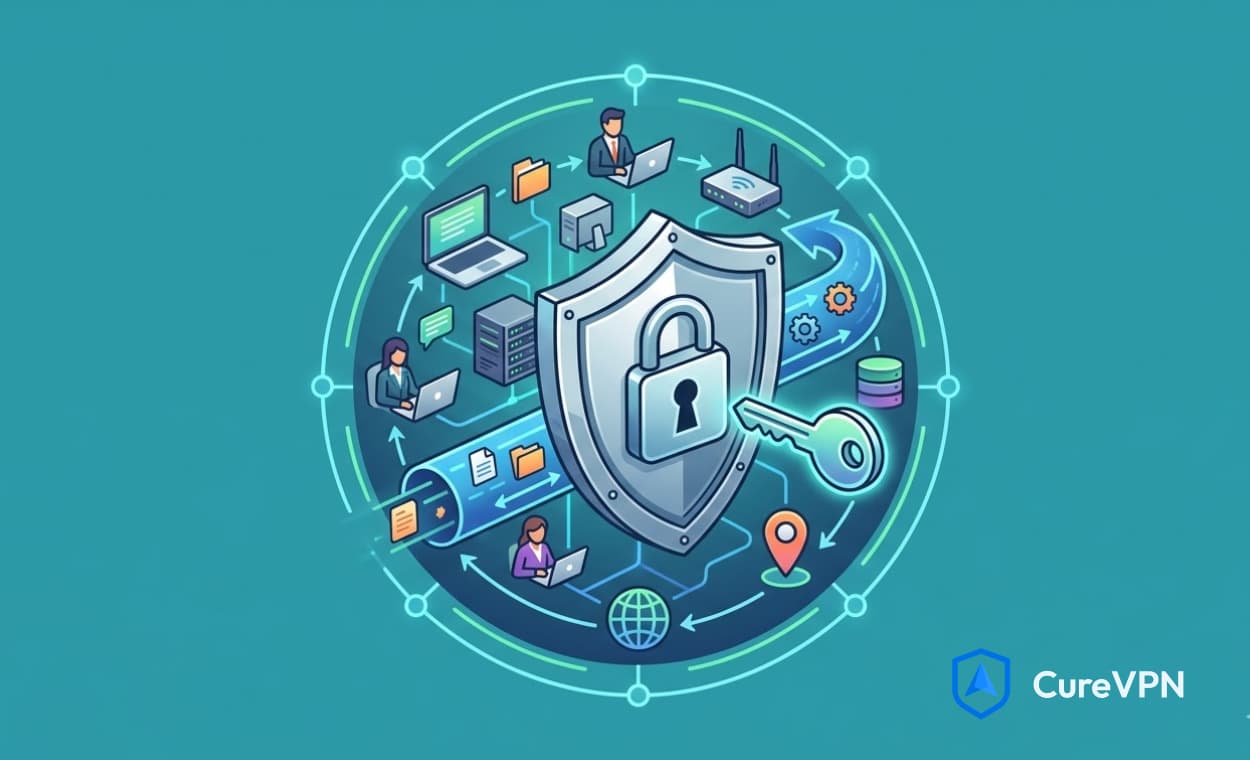
VPN solutions for home create a secure tunnel between your devices and the internet. Traffic passes through this tunnel instead of traveling openly across your internet service provider’s network.
Think of it as sealing every request your home makes before it leaves the router. Websites see the VPN server instead of your real IP address. ISPs see encrypted packets instead of readable activity logs.
Behind the scenes, modern VPNs rely on AES-256 encryption, secure tunneling protocols like WireGuard or OpenVPN, and hardened DNS routing. These components work together to prevent interception, manipulation, or profiling.
A clear distinction exists between a Free VPN Service and a reliable home VPN. Free tools often monetize user data, inject ads, or limit bandwidth aggressively. Reliable VPN solutions for home use operate under strict no-logs policies and fund operations through subscriptions, not surveillance.
Key Problems Home Users Face Without a VPN
Unprotected home connections face multiple risks that rarely announce themselves upfront.
ISP tracking and data logging: Internet providers can log browsing activity, streaming behavior, and connection timestamps. This data often feeds advertising models or third-party partnerships.
Unsafe public Wi-Fi connections: Phones and laptops frequently move between home networks and public hotspots. Without encryption, credentials and session data remain exposed.
Geo-restrictions on streaming services: Streaming platforms limit content libraries by region. Many users search for a VPN for Tubi or similar services to access titles unavailable in their location.
Online gaming lag and throttling: ISPs throttle traffic during peak hours. Competitive gamers feel it as sudden latency spikes and packet loss.
Kids’ privacy and family-wide security gaps: Children install apps without reading permissions. Parents often ask, “Is someone spying on my phone?” The concern is valid when data flows unchecked.
What to Look for in the Best VPN Solutions for Home
Not all VPNs serve home users equally. Effective VPN solutions for home share several non-negotiable traits.
Strong encryption standards: AES-256 remains the gold standard. Anything weaker signals shortcuts.
No-logs privacy policy: Trust depends on architecture. Providers should operate under privacy-first jurisdictions and publish transparent policies.
Kill switch and DNS protection: A kill switch prevents accidental exposure during connection drops. Encrypted DNS stops request-level leaks.
Speed consistency for streaming and gaming: Stable throughput matters more than raw peak speed.
Multi-device and family support: Home protection means phones, tablets, consoles, and smart TVs under one plan.
Ease of use for non-tech users: uuhSecurity should not require configuration manuals.
Top 5 VPN Solutions for Home (2026 Edition)
1. Cure VPN
Cure VPN has built its reputation on putting user privacy above profit. Founded by security professionals frustrated with industry practices, the service prioritizes transparency and technical excellence over aggressive marketing.
The platform runs on a proprietary network of 6,500+ servers across 90 countries. This extensive infrastructure ensures fast connections regardless of your location. Unlike providers that oversell server capacity, Cure VPN maintains strict load balancing to prevent slowdowns during peak hours.
AES-256-GCM encryption combines with perfect forward secrecy, meaning each session uses unique encryption keys. Even if one key were somehow compromised, past and future sessions remain secure. The service supports WireGuard, OpenVPN, and IKEv2 protocols, allowing users to balance speed and security based on their needs.
Device compatibility spans all major platforms: Windows, macOS, iOS, Android, Linux, and routers. One subscription covers unlimited simultaneous connections, making it ideal for large households or tech-enthusiastic users with multiple devices. The router app particularly stands out with its straightforward configuration wizard.
Speed tests consistently place Cure VPN among the fastest services available. Streaming 4K content happens without buffering, even when connecting to distant servers. Gaming latency remains low enough for competitive play, something many VPNs struggle to achieve.
The privacy policy underwent an independent audit by Cure53, a respected security firm. Results confirmed zero logging of user activities, connection times, or IP addresses. Cure VPN operates under Swiss jurisdiction, benefiting from some of the world’s strongest privacy laws.
Pricing starts at $3.99 monthly with annual billing, competitive considering the unlimited device policy. Monthly plans cost $11.99, and a 45-day money-back guarantee exceeds industry standards. Customer support responds quickly through 24/7 live chat, with knowledgeable agents who understand technical details.
Split tunneling allows certain apps to bypass the VPN while others remain protected. This feature benefits users who need local network access for smart home devices while keeping browsers encrypted. Can VPN stop hackers targeting vulnerable IoT devices? Cure VPN’s router-level protection creates a security perimeter around your entire network.
The service includes built-in malware and ad blocking, adding another defense layer without additional software. Automatic updates ensure you always run the latest security patches.
Pros:
- Unlimited simultaneous connections
- Independently audited no-logs policy
- Exceptional speed performance
- Router app with easy setup
- 45-day money-back guarantee
Cons:
- Newer brand with less name recognition
- No dedicated IP option yet
Best for: Families seeking comprehensive protection across unlimited devices
Rating: 9.5/10
2. NordVPN
NordVPN dominates market share through consistent performance and feature innovation. Over a decade of operation has refined their service into a polished product that balances security with usability.
The server network exceeds 5,400 locations across 60 countries. Specialized servers handle specific tasks: P2P-optimized nodes for torrenting, obfuscated servers for restrictive networks, and Double VPN routing for maximum security. This last feature encrypts your connection twice by routing through two separate servers.
Threat Protection blocks malware, trackers, and malicious ads at the connection level. This works even when you’re not actively browsing, protecting all apps and background processes. The feature essentially combines VPN security with antivirus functionality.
Speed performance ranks consistently high, though slightly behind Cure VPN in independent testing. NordLynx protocol, their implementation of WireGuard, delivers fast connections with minimal overhead. Streaming services work reliably, with dedicated servers optimized for major platforms.
Six simultaneous connections per subscription feels limiting for larger households. This restriction pushes users toward router installation, which works well but requires more technical knowledge than competing solutions.
Privacy protections include RAM-only servers that never write data to hard drives. Even if authorities seized physical hardware, they’d find no user information. Annual audits by PricewaterhouseCoopers verify their no-logs claims.
Pricing starts at $3.39 monthly with two-year plans, though monthly subscriptions jump to $12.99. The company frequently runs promotions, so watching for deals can save money. A 30-day refund policy provides adequate testing time.
Best VPNs for Chrome often get mentioned alongside NordVPN because of their excellent browser extension. Unlike many competitors whose extensions simply proxy traffic, Nord’s provides full encryption and includes Threat Protection Lite for ad blocking.
Pros:
- Double VPN for enhanced security
- Threat Protection includes malware blocking
- Excellent Chrome extension
- RAM-only servers
Cons:
- Limited to six connections
- Premium pricing without promotions
Best for: Security-conscious users prioritizing advanced features
Rating: 9.2/10
3. ExpressVPN
ExpressVPN has maintained premium positioning through unwavering focus on speed and reliability. The service costs more than competitors but delivers consistent performance that justifies the price for users who prioritize these factors.
TrustedServer technology runs the entire network on RAM, meaning all data is erased with every reboot. The 3,000+ server locations span 94 countries, emphasizing quality over quantity. Server load rarely exceeds 50%, ensuring fast connections during peak hours.
Lightway protocol, developed in-house, challenges WireGuard for speed while using less battery on mobile devices. Connection times drop to under two seconds, and switching servers happens almost instantaneously. This responsiveness matters when you need quick access to different regions.
MediaStreamer functions as a smart DNS service, bringing VPN benefits to devices that don’t support native apps. Smart TVs, game consoles, and streaming boxes can access geo-restricted content without installing software. This feature sets ExpressVPN apart from services that require router-level configuration for these devices.
Five simultaneous connections match or slightly lag behind competitors. Given the premium pricing, unlimited connections would better reflect the value proposition.
Speed tests consistently rank ExpressVPN at or near the top. Streaming 4K content happens without quality drops, and gaming latency stays low enough for competitive play. Distance to servers matters less than with other providers, thanks to network optimization.
Privacy practices include a verified no-logs policy audited by KPMG. The British Virgin Islands jurisdiction keeps the company outside surveillance alliances like Five Eyes. The TrustedServer infrastructure makes retaining logs technically impossible.
Pricing starts at $6.67 monthly with annual billing, climbing to $12.95 for month-to-month service. A 30-day money-back guarantee allows testing, though the high price point makes this refund window feel standard rather than generous.
Split tunneling works on all platforms, including iOS (where many VPNs don’t offer this feature). Network Lock kill switch blocks traffic if the connection drops, preventing accidental exposure.
Pros:
- Fastest overall speeds
- MediaStreamer for unsupported devices
- Lightway protocol efficiency
- Split tunneling on iOS
Cons:
- Highest pricing in category
- Only five simultaneous connections
Best for: Users prioritizing speed and willing to pay premium prices
Rating: 9.0/10
4. Surfshark
Surfshark disrupted the VPN market by offering unlimited device connections at budget-friendly prices. This value proposition attracts large families and users with extensive device collections.
The unlimited connection policy stands alone among major providers. You can protect every device in your household plus extended family without worrying about device limits. This approach makes Surfshark incredibly cost-effective for power users.
CleanWeb blocks ads, trackers, and malware across all connected devices. Combined with the VPN connection, it creates comprehensive protection that rivals standalone security suites. The feature works system-wide, not just in browsers.
MultiHop routes connections through two countries simultaneously, similar to NordVPN’s Double VPN. This adds security for users in restrictive regions or those requiring maximum anonymity. Speed takes a hit with MultiHop enabled, but the option exists when needed.
Server network covers 3,200+ locations across 100 countries. Performance varies more than that of premium competitors, with some servers experiencing slowdowns during evening hours. Connecting to less-popular regions usually restores full speed.
Camouflage Mode disguises VPN traffic as regular internet activity, defeating VPN detection systems. This matters for accessing services that block VPN connections or for users in countries that restrict VPN usage.
Privacy protections include independently audited no-logs policies and RAM-only servers. The Netherlands jurisdiction provides adequate privacy protection, though not as strong as Switzerland or the British Virgin Islands.
Pricing represents exceptional value at $2.49 monthly with two-year plans. Monthly subscriptions cost $12.95, matching industry averages. A 30-day money-back guarantee reduces purchase risk.
Wondering is someone spying on my phone? Surfshark’s mobile apps include GPS spoofing, preventing apps from tracking your real location even when VPN is active. This feature goes beyond standard VPN protection to address device-level privacy.
Pros:
- Unlimited simultaneous connections
- Aggressive pricing
- CleanWeb ad and malware blocking
- GPS spoofing on mobile
Cons:
- Inconsistent server speeds
- Smaller company with less infrastructure
Best for: Large families and budget-conscious users
Rating: 8.8/10
5. CyberGhost
CyberGhost targets users who want simplicity without sacrificing security. The interface emphasizes one-click connections for specific tasks rather than technical configuration options.
Specialized servers optimize for different activities. Dedicated streaming profiles for Netflix, BBC iPlayer, and other services automatically connect to servers that work with those platforms. Torrenting servers prioritize P2P performance, while gaming servers minimize latency.
The massive server network exceeds 9,000 locations across 91 countries, the largest in this comparison. This extensive infrastructure means you’ll find nearby servers regardless of location, reducing connection overhead.
Seven simultaneous connections surpass NordVPN and ExpressVPN while falling short of Surfshark and Cure VPN. For average households, seven devices provide adequate coverage.
Speed performance sits in the middle tier. Connections work well for streaming and browsing, though gamers and power users might notice latency on distant servers. The specialized servers partly compensate by optimizing for specific use cases.
Privacy features include quarterly transparency reports detailing government requests and company responses. Romanian jurisdiction offers strong privacy protections outside major surveillance alliances. No-logs policy underwent an independent audit, confirming claims.
Pricing gets complicated with multiple tiers. Basic plans start at $2.19 monthly with three-year commitments, while month-to-month service costs $12.99. The 45-day money-back guarantee exceeds most competitors, giving extra testing time.
User interface design prioritizes accessibility over advanced features. First-time VPN users find the experience intuitive, while power users might feel constrained by simplified options. The trade-off suits the target audience.
Looking for a free VPN service? CyberGhost offers a seven-day free trial on mobile devices, letting you test before committing. Keep in mind that truly free VPNs often compromise privacy by selling user data or injecting ads. Trial periods from paid providers offer better security.
Pros:
- Largest server network
- Specialized streaming and gaming servers
- 45-day money-back guarantee
- Beginner-friendly interface
Cons:
- Mid-tier speed performance
- Complicated pricing tiers
Best for: Beginners and streaming enthusiasts
Rating: 8.5/10
How to Set Up a VPN Solution at Home
VPN deployment no longer demands technical expertise.
VPN on phones, laptops, and tablets
Native apps install in minutes and activate with one tap.
Router-level VPN protection
Router-based VPNs extend coverage to every connected device automatically.
Smart TV and console setup basics
Many VPNs now support direct installation or DNS-based routing for consoles.
VPN Solutions for Home Use Cases
Different households adopt VPN solutions for home use for different reasons.
Family privacy and parental protection
Encrypted traffic limits tracking across apps and browsers.
Streaming without geo-blocks
Content libraries expand when regional restrictions disappear.
Online gaming without ISP throttling
Stable routing reduces latency and packet loss.
Remote work and secure home offices
Business-grade encryption protects credentials and cloud access.
Interestingly, many providers now adapt home architectures for white label VPN for business offerings. This crossover improved reliability and infrastructure quality for residential users as well.
Common Myths About Home VPNs
“VPNs slow down the internet”
Modern protocols often improve routing efficiency.
“Only hackers need VPNs”
Privacy tools serve ordinary households more than attackers.
“Free VPNs are good enough”
Free services frequently trade privacy for access.
Final Verdict: Which VPN Solution for Home Is Right for You?
Cure VPN suits households that value simplicity, speed, and privacy without technical complexity. Families, gamers, and remote workers benefit immediately.
Premium tools make sense for users who manage multiple locations or have advanced routing needs.
Real home usage favors balance over excess features. VPN solutions for home should fade into the background while quietly protecting every connection.
Experience shows that the best security tools feel invisible when they work correctly. Cure VPN fits that profile well, shaped by practical use cases rather than marketing promises.