
Imagine waking up one morning to find your phone displaying “No Service.” You assume it is a network glitch, so you connect to Wi-Fi and check your email. That is when you see the notification: “Password changed successfully.” Then another: “$10,000 withdrawal initiated.” Your heart sinks. Your phone number has been stolen, and with it, access to your bank accounts, cryptocurrency wallets, and email. This nightmare scenario is known as SIM swapping—one of the most dangerous mobile security threats in the digital age.
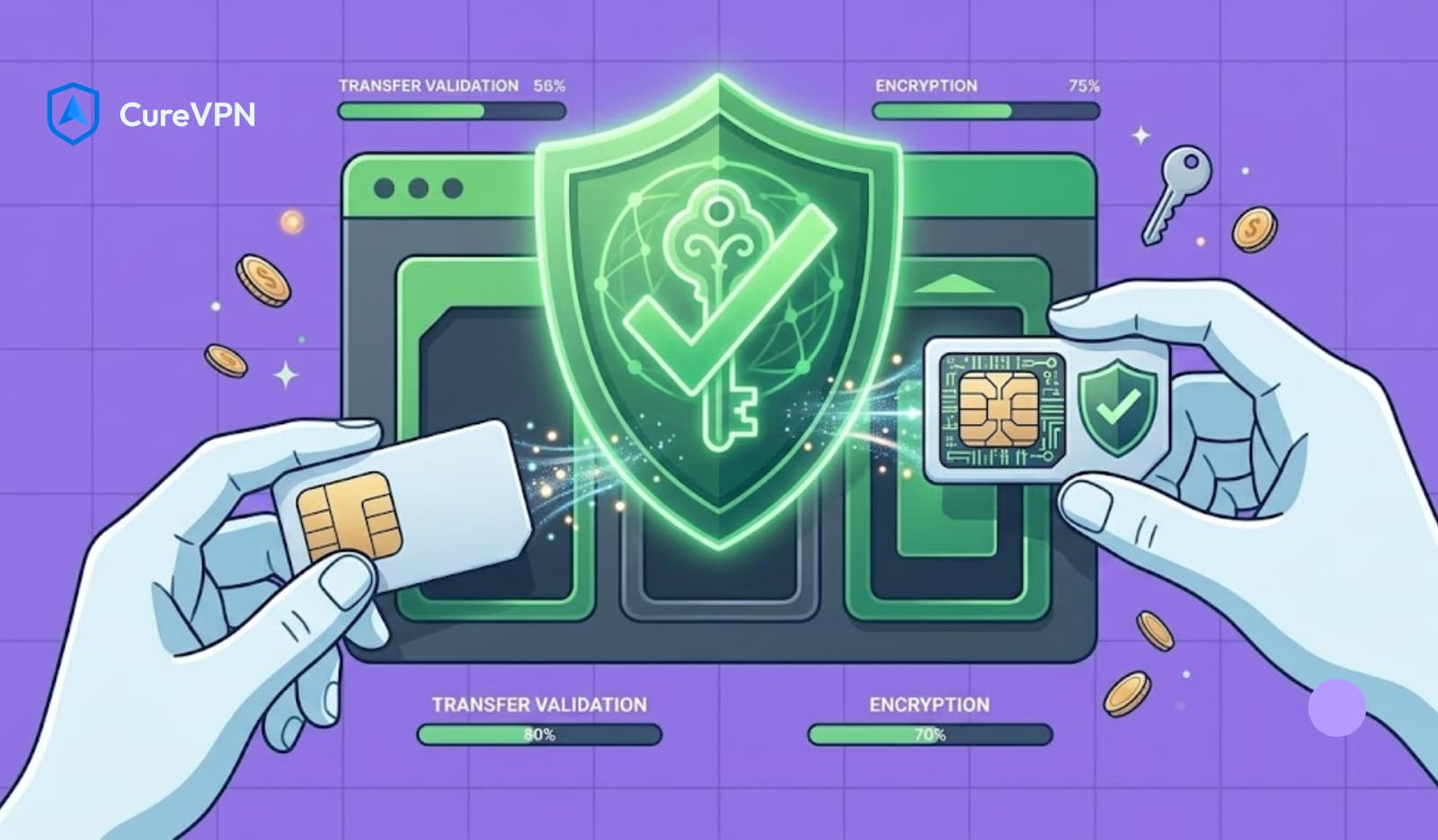
What is SIM swapping? It is a devastating form of account takeover attack where criminals trick your mobile carrier into transferring your phone number to a SIM card they control. Once they own your number, they receive every text message, phone call, and — most critically — every one-time passcode sent to your device.
Your phone number has become the master key to your entire digital life. Banks verify withdrawals via SMS. Crypto exchanges confirm transactions through text. Email providers send password reset codes to your mobile. When hackers control your number, they control everything.
Moreover, this attack requires zero technical skill. No malware. No phishing links. No password cracking. The attacker simply calls your carrier, impersonates you using stolen personal data, and convinces a customer service representative to activate a new SIM card. Within minutes, your phone goes dead. Theirs lights up with your identity.
The FBI’s Internet Crime Complaint Center tracked $25,983,946 in reported SIM swap losses in the United States during 2024 alone. Meanwhile, the UK’s fraud prevention service Cifas reported a staggering 1,055% surge in unauthorized SIM swaps — from just 289 cases in 2023 to nearly 3,000 in 2024. This is not a niche threat. It is a global epidemic targeting anyone with a mobile phone and a bank account.
What Is a SIM Swap Attack?
A SIM swap attack—also known as SIM jacking, SIM splitting, or phone number theft—occurs when a cybercriminal convinces a mobile carrier to transfer a victim’s phone number to a new SIM card that the attacker controls. Once this transfer is complete, the attacker’s device receives all calls and text messages intended for the victim.
This might sound like a simple administrative error, but the consequences are devastating. Your phone number has become the master key to your digital life. Banks, email providers, social media platforms, and cryptocurrency exchanges all use your phone number for verification and account recovery. When an attacker gains control of your number, they essentially gain the keys to your entire digital identity.
What makes SIM swapping particularly insidious is that it does not require hacking your phone or stealing your physical SIM card. Instead, it exploits weaknesses in mobile carrier verification processes. Attackers use social engineering attacks—manipulating customer service representatives into bypassing security protocols—to accomplish their goals.
How Does SIM Swapping Work?
Understanding how hackers perform SIM swaps is the first step toward protecting yourself. These attacks typically follow a predictable four-step pattern.
Step 1: Reconnaissance and Data Collection
The attack begins with information gathering. Hackers collect personal details about their target, including full name, date of birth, home address, Social Security number, and sometimes even passport or ID details.
Where do they get this information? Data breaches, phishing campaigns, social media oversharing, and public records are all common sources. In many cases, victims unknowingly provide this information themselves through fraudulent emails or websites.
Step 2: Social Engineering the Carrier
Armed with the victim’s personal information, the attacker contacts the victim’s mobile carrier and impersonates them. They might claim they lost their phone, upgraded to a new device, or need to port their number to a new carrier.
If the carrier’s verification process is weak, the attacker convinces the representative to activate a new SIM card under the victim’s phone number. This is where social engineering attacks are most effective—they exploit human error rather than technical vulnerabilities.
Step 3: Number Takeover
Once the carrier completes the transfer, the victim’s phone immediately loses service. The attacker’s device now receives all calls and texts meant for the victim. This includes one-time passcodes (OTPs), password reset links, and multi-factor authentication tokens.
Step 4: Account Takeover
With control of the phone number, the attacker can reset passwords, bypass SMS-based authentication, and lock the victim out of critical accounts. They can access email, social media, online banking, and cryptocurrency wallets. From there, they can drain financial accounts, steal sensitive data, or even impersonate the victim to defraud friends and family.
How SIM Swapping Works: Step-by-Step Breakdown
Understanding how SIM swapping works reveals why this attack is so devastatingly effective.
Phase 1: Information Gathering
Attackers begin by collecting your personal information through multiple channels:
| Data Source | What They Find | How They Get It |
|---|---|---|
| Data breaches | Name, address, DOB, SSN | Purchased on dark web markets |
| Social media | Mother’s maiden name, pet names, location | Public profiles and posts |
| Phishing emails | Account credentials, security answers | Fake bank/carrier emails |
| Public records | Property ownership, court filings | Government databases |
In India, a 27-year-old victim lost ₹7.2 lakh without ever interacting with a scammer. Hackers simply convinced the telecom provider to hand over his number using data purchased from a breach.
Phase 2: The Social Engineering Call
The attacker contacts your mobile carrier — by phone, online chat, or even walking into a retail store. They impersonate you using the stolen data and claim an emergency:
- “I lost my phone and need a replacement SIM urgently”
- “My SIM card is damaged and I cannot receive calls”
- “I am traveling and need my number transferred to a local SIM”
Carriers with lax verification protocols often activate the new SIM with minimal resistance.
Phase 3: The Takeover
Once the new SIM activates, your physical phone loses service. The attacker’s device now receives:
- All incoming calls and text messages
- One-time passcodes (OTPs) for bank logins
- Password reset links for email and social media
- Two-factor authentication codes for crypto exchanges
Phase 4: The Heist
With control of your number, the attacker executes rapid account takeovers:
- Reset your email password using SMS verification
- Access banking apps through OTP interception
- Drain cryptocurrency wallets before you notice
- Lock you out of recovery options by changing backup emails and phone numbers
A Maharashtra businessman lost over ₹1 crore overnight after his phone unexpectedly dropped off the network. By the time he realized what happened, his financial profile had been entirely compromised.
SIM Swapping vs SIM Cloning: Know the Difference
| Factor | SIM Swapping | SIM Cloning |
|---|---|---|
| Method | Social engineering carrier | Physical duplication of SIM chip |
| Technical skill | Low (no hacking required) | High (requires specialized hardware) |
| Detection | Phone suddenly shows “No Service” | Both original and clone work simultaneously |
| Prevalence | Extremely common | Rare, declining |
| Prevention | Carrier PIN, SIM lock | Physical SIM security |
| Speed | Minutes to execute | Hours to days |
Bottom line: SIM swapping is the dominant threat because it requires no technical expertise and exploits human weakness at carriers rather than technical vulnerabilities in SIM cards.
How Common Is SIM Swapping? Alarming 2026 Statistics
The numbers paint a terrifying picture of a threat exploding across every continent.
United States
| Year | FBI IC3 Complaints | Reported Losses | Average Loss per Victim |
|---|---|---|---|
| 2021 | 1,600 | $68 million | $42,500 |
| 2022 | 2,026 | $72 million | $35,500 |
| 2023 | 1,075 | $48.8 million | $45,400 |
| 2024 | 982 | $25.98 million | $26,500 |
While reported dollar amounts fluctuate, the core threat remains persistent. The FBI notes that multi-million-dollar losses from this attack vector are a consistent problem.
United Kingdom
Cifas reported a 1,055% surge in SIM swap cases in 2024. Even more alarming: 48% of all account takeovers in 2024 involved mobile phone accounts.
Latin America
Social engineering fraud attempts targeting banks increased 155% in 2025, with SIM swapping serving as the primary entry point for account takeover attacks.
Kenya
Safaricom — serving two-thirds of Kenya’s 70 million phones — experienced a 327% increase in SIM swapping from 2024 to 2025, jumping from 11 cases to 47.
India
Indians reported over ₹22,000 crore in cyber fraud losses, with SIM swaps serving as a primary tool of execution.
Who Gets Targeted? The Victim Profile
Age Demographics
| Age Group | Vulnerability | Why Targeted |
|---|---|---|
| 60+ years | Highest financial losses ($6.3M in US 2024) | More likely to use SMS 2FA, susceptible to social engineering |
| 30-59 years | Moderate losses, high crypto exposure | Active investors, multiple financial accounts |
| 18-29 years | Lower individual losses, high volume targets | Social media influence, crypto trading, less security awareness |
In the UK, individuals aged 61+ now account for 29% of all account takeover victims — a 90% year-on-year increase.
High-Value Targets
- Cryptocurrency investors: One cybersecurity expert reported seeing $15-20 million stolen in a single swap from crypto accounts.
- Business executives: Corporate email access leads to wire fraud
- Social media influencers: Account resale value and audience exploitation
- High-net-worth individuals: Banking and investment account access
Signs Your SIM Has Been Swapped
Recognize these warning signs immediately:
| Sign | What It Means | Urgency |
|---|---|---|
| “No Service” suddenly appears | Your SIM was deactivated | 🔴 Critical — act within minutes |
| Cannot make or receive calls | Number transferred to attacker | 🔴 Critical |
| Unexpected password reset emails | Attacker accessing accounts | 🔴 Critical |
| Bank alerts for unknown transactions | Financial accounts compromised | 🔴 Critical |
| Social media login failures | Accounts being hijacked | 🟡 High |
| Two-factor codes you did not request | Attacker testing account access | 🟡 High |
If you see “No Service” and were not expecting it: Assume compromise until proven otherwise. Contact your carrier from a different phone immediately.
How Common Is SIM Swapping? (Statistics & Data)
The numbers paint a concerning picture of this growing threat.
U.S. Statistics
According to the FBI’s Internet Crime Complaint Center (IC3):
- 2024: 982 SIM swap complaints with $25,983,946 in reported losses
- 2023: 1,075 complaints with approximately $48.8 million in losses
- 2022: 2,026 complaints with $72,652,571 in losses
While complaint numbers have declined since the 2022 peak—largely due to the FCC’s November 2023 SIM swap rule and carrier alerting requirements—the threat remains significant. In 2024, IC3 received 859,532 total complaints with $16.6 billion in losses across all cybercrime categories.
International Statistics
The problem is global:
- United Kingdom: Cifas reported a staggering 1,055% surge in unauthorized SIM swaps, with nearly 3,000 cases in 2024
- Australia: IDCARE documented a 240% increase in people seeking help for phone porting and SIM swap fraud in 2024 versus 2023
The Undercount Problem
These official numbers almost certainly understate the real exposure. Banks routinely settle account takeover fraud claims without victims escalating to a federal complaint, and many SIM-swap-enabled losses are categorized under broader fraud reporting categories. Additionally, 90% of incidents occur without the victim’s engagement—the customer learns about the swap when their phone goes dark, not before.
Real-World SIM Swapping Examples
The $33 Million T-Mobile Arbitration (March 2025)
In one of the largest SIM swap-related awards on record, an arbitration panel ordered T-Mobile to pay $33 million to a customer whose cryptocurrency was stolen in a SIM swap attack. The arbitrator found that T-Mobile’s weak authentication enabled the theft. The company promptly paid the award but subsequently moved to seal the arbitrator’s findings.
The FTX Hack (November 2022)
The largest publicly attributed loss remains the November 2022 FTX hack, where co-conspirators transferred over $400 million in cryptocurrency from FTX hot wallets after a single AT&T retail-store SIM swap.
The $1.7 Million Scheme
Kimionte Bennett, 30, was sentenced to 70 months in federal prison for coordinating a SIM card-swapping fraud scheme that resulted in $1.7 million in losses. Bennett and his co-conspirators used SIM swaps to intercept multi-factor authentication codes and access victims’ cryptocurrency accounts.
The SEC X Account Hack (2025)
Eric Council Jr. pleaded guilty to conspiracy to commit aggravated identity theft after participating in a SIM swap that gave conspirators control of the SEC’s X account. The hack caused Bitcoin prices to spike temporarily.
Scattered Spider
The cybercriminal group Scattered Spider (UNC3944) has converted SIM swapping from a consumer-cryptocurrency vector into an enterprise initial-access technique. The group was responsible for the September 2023 MGM Resorts attack (approximately $100 million impact) and the Caesars Entertainment breach ($15 million ransom paid)
SIM Cloning vs SIM Swapping: What Is the Difference?
People often confuse SIM cloning with SIM swapping, but they are fundamentally different mobile security threats.
| Feature | SIM Cloning | SIM Swapping |
|---|---|---|
| Method | Copying data from your physical SIM card | Tricking carrier to transfer your number |
| Physical Access Required? | Yes (need your SIM card) | No (works remotely) |
| Your Phone Still Works? | Yes (both phones share number) | No (your phone loses service) |
| How It Works | Duplicating SIM credentials | Social engineering carrier employees |
| Detection | Difficult to detect | Obvious (phone loses service) |
SIM cloning involves creating a duplicate of your physical SIM card. This requires physical access to your SIM and specialized equipment. Both phones can receive calls and texts simultaneously.
SIM swapping is far more dangerous because it does not require physical access. Attackers can hijack your number from anywhere in the world using nothing more than your personal information and a phone call.
Can SIM Swapping Bypass Two-Factor Authentication?
Yes. This is perhaps the most frightening aspect of SIM swapping attacks.
Two-factor authentication (2FA) is designed to add an extra layer of security beyond passwords. However, when that second factor is SMS-based authentication—sending one-time passcodes via text message—SIM swapping completely neutralizes this protection.
Here is why: When you log into an account that uses SMS 2FA, the service sends a verification code to your phone number. If an attacker has hijacked your number through a SIM swap, that code goes directly to their device. They can enter it and gain full access to your account.
This is why security experts strongly recommend moving away from SMS-based authentication. The National Institute of Standards and Technology (NIST) formally reclassified SMS and PSTN one-time passcodes as a restricted authenticator in its SP 800-63B Rev 4 guidelines (2025)
Signs of a SIM Swap Attack
Early detection can significantly limit the damage. Watch for these warning signs:
- Sudden loss of cellular service: Your phone shows “No Service” or “SOS Only” despite having signal bars previously
- Inability to make or receive calls or texts: This is the most obvious indicator
- Unexpected notifications: You receive alerts about account changes, password resets, or login attempts from unfamiliar devices
- Carrier communication: Your mobile provider sends notifications about SIM changes or port-out requests you did not authorize
- Suspicious account activity: Unauthorized transactions appear in your bank or crypto accounts
If you experience any of these signs, act immediately. Do not assume it is a network issue.
How to Prevent SIM Swapping: 10 Proven Methods
Method 1: Set a Carrier Account PIN
Every major carrier now offers account PIN protection. This PIN must be provided before any SIM changes, port-outs, or account modifications.
| Carrier | Feature Name | How to Enable |
|---|---|---|
| Verizon | Number Lock / SIM Protection | My Verizon app → Account → Security → SIM Protection |
| T-Mobile | Account PIN + Account Takeover Protection | T-Mobile app → Profile → Security |
| AT&T | Number Transfer PIN | myAT&T → Profile → Sign-in info |
| PureTalk | SIM Swap Protection | Account settings → Security menu |
Verizon’s SIM Protection blocks all transactions requiring a new SIM, including swaps, device upgrades, and BYOD transfers. When disabled, a mandatory 15-minute delay prevents immediate fraudulent changes.
Method 2: Switch to App-Based Authentication
Never use SMS for two-factor authentication. Instead, use:
- Google Authenticator (free, works offline)
- Microsoft Authenticator (enterprise features, backup)
- Authy (multi-device sync, encrypted backups)
- Hardware security keys (YubiKey, Titan Security Key)
These generate codes on your physical device, completely independent of your phone number.
Method 3: Remove Phone Numbers from Account Recovery
For critical accounts (email, banking, crypto), remove your phone number as a recovery method. Use:
- Backup email addresses
- Hardware security keys
- Authenticator app backup codes stored offline
Method 4: Enable Account Notifications
Configure your carrier and financial institutions to send alerts for:
- SIM change requests
- Password resets
- New device logins
- Large transactions
Verizon, T-Mobile, and AT&T all send text or email alerts when SIM changes are requested.
Method 5: Use a Dedicated Security-Focused Carrier
Efani is a U.S.-based carrier built specifically to prevent SIM swaps. Their SAFE plan adds 11 layers of verification before any account changes. While not anonymous (requires ID verification), it offers low-maintenance ongoing protection for high-risk users like crypto investors and business owners.
Method 6: Implement eSIM Where Possible
eSIMs (embedded SIMs) cannot be physically swapped. Many newer phones support eSIM, making traditional SIM swap attacks impossible. However, attackers can still socially engineer eSIM transfers — so combine with PIN protection.
Method 7: Freeze Your Credit
Prevent attackers from opening new financial accounts in your name:
- Experian: experian.com/freeze
- Equifax: equifax.com/personal/credit-report-services
- TransUnion: transunion.com/credit-freeze
Method 8: Use a Password Manager
Unique, complex passwords for every account prevent cascade compromises. Recommended managers:
- Bitwarden (free, open-source)
- 1Password (family sharing, travel mode)
- Proton Pass (encrypted, privacy-focused)
Method 9: Enable Biometric Authentication
Where available, use fingerprint or facial recognition instead of SMS codes. This binds authentication to your physical presence, not your phone number.
Method 10: Regular Security Audits
Monthly, verify:
- Carrier account PIN is active
- No unauthorized devices linked to accounts
- Recovery methods are up to date
- Bank and crypto accounts use non-SMS 2FA
What to Do If You’ve Been SIM Swapped?
Act within the first hour. Speed determines whether you lose hundreds or millions.
| Step | Action | Timeframe |
|---|---|---|
| 1 | Call your carrier from a different phone — report fraud, freeze account | Immediately |
| 2 | Contact your bank — freeze accounts, block transactions | Within 15 minutes |
| 3 | Change email passwords from a secure device | Within 30 minutes |
| 4 | Check crypto exchange accounts — withdraw if possible, freeze if compromised | Within 1 hour |
| 5 | File FBI IC3 complaint (ic3.gov) | Same day |
| 6 | File police report (required for insurance claims) | Within 24 hours |
| 7 | Place fraud alert on credit reports | Within 48 hours |
| 8 | Document everything for potential legal action | Ongoing |
SIM Swapping and Cryptocurrency: The Perfect Storm
Cryptocurrency has become the primary driver of SIM swap profitability. The irreversible, pseudonymous nature of blockchain transactions makes crypto the perfect target.
| Factor | Why Crypto Amplifies SIM Swap Damage |
|---|---|
| Irreversibility | Stolen crypto cannot be recalled or frozen |
| Pseudonymity | Attackers can launder funds through mixers |
| High value | Single wallets often hold $100K-$50M+ |
| SMS 2FA prevalence | Many exchanges still default to text verification |
| Instant transfers | No banking delays for “unusual activity” review |
High-Profile Cases:
- Michael Terpin (2018): $23.8 million stolen through SIM swap. Teenage attackers ordered to pay back $22-20 million.
- Joseph Jones (2020): $38 million in cryptocurrency stolen via T-Mobile SIM swap. T-Mobile paid $33 million settlement in March 2025.
- Jack Dorsey (2019): Twitter CEO’s account hacked via SIM swap.
Critical Protection for Crypto Users:
- Never use SMS 2FA on exchanges — use Google Authenticator or hardware keys
- Whitelist withdrawal addresses — prevent transfers to unknown wallets
- Use cold storage — keep majority of funds offline in hardware wallets
- Enable exchange-level security — Coinbase, Kraken, and Binance offer advanced protection features
- Consider a dedicated security carrier like Efani for your primary number
How Mobile Carriers Handle SIM Swaps?
Regulatory Response: FCC 23-95
On November 15, 2023, the FCC introduced Rule FCC 23-95 specifically targeting SIM swap fraud. Requirements include:
- Secure customer authentication before SIM changes (PINs, passwords, MFA)
- Prohibition of “predictable information” like SSNs or birthdates for verification
- Immediate customer notification via text/email for all SIM change requests
- Employee training to identify fraudulent requests and social engineering
However, the FCC waived the original July 8, 2024 implementation deadline after telecom companies requested more time for technology upgrades and staff training. As of 2026, full enforcement remains pending.
What Carriers Are Actually Doing?
| Carrier | Protection Features | Effectiveness |
|---|---|---|
| Verizon | Number Lock, SIM Protection, 15-minute delay on disable | Strong |
| T-Mobile | Account PIN, Account Takeover Protection, SIM Protection Service | Moderate (history of breaches) |
| AT&T | Number Transfer PIN, enhanced fraud detection | Moderate |
| MVNOs | Varies widely — many lack advanced protections | Weak to Moderate |
T-Mobile’s Troubled History: The carrier suffered data breaches in 2021, 2022, and 2023. The $33 million settlement for Joseph Jones’ SIM swap case revealed systemic security failures. T-Mobile has since distributed 200,000 hardware security keys to employees and agreed to bolster cybersecurity.
Does a VPN Prevent SIM Swapping?
No. A VPN does not prevent SIM swapping. This is a critical distinction.
| What VPNs Protect | What SIM Swapping Bypasses |
|---|---|
| Internet traffic encryption | Carrier-level phone number control |
| IP address masking | SMS and call interception |
| Location privacy | Social engineering at telecoms |
| Network-level attacks | Physical SIM/eSIM transfers |
A VPN secures your internet connection. SIM swapping attacks your mobile carrier account. These are entirely separate attack vectors.
However, a VPN provides complementary protection:
- Prevents phishing that harvests personal data used in SIM swaps
- Secures public Wi-Fi where attackers might intercept credentials
- Hides your real IP from services that use it for verification
For comprehensive protection, combine SIM swap prevention (PIN, app-based 2FA) with VPN usage for online privacy.
Common Mistakes That Enable SIM Swaps
Mistake 1: Using SMS for Two-Factor Authentication
SMS-based 2FA is the single largest enabler of SIM swap attacks. Switch to app-based or hardware key authentication immediately.
Mistake 2: Reusing Passwords Across Accounts
One breached account provides attackers with data to socially engineer your carrier. Use unique passwords for every service.
Mistake 3: Ignoring “No Service” Warnings
Many victims assume network issues when their phone drops service. Treat sudden loss of service as a potential security incident.
Mistake 4: Oversharing on Social Media
Birthdates, pet names, mother’s maiden name — all common security questions. Attackers harvest this data to impersonate you.
Mistake 5: Not Setting Carrier PINs
Every major carrier offers free PIN protection. Not enabling it is like leaving your front door unlocked.
Mistake 6: Relying on Email Recovery
If your email uses SMS recovery, attackers who swap your SIM can reset your email, then everything else.
Best Practices for Bulletproof Mobile Security
The Security Pyramid
                    ┌─────────────┐
                    │  HARDWARE   │
                    │   KEYS      │  ← Ultimate protection
                    │  (YubiKey)  │
                    ├─────────────┤
                    │  APP-BASED  │
                    │     2FA     │  ← Strong protection
                    │(Auth/MS/Google)
                    ├─────────────┤
                    │  CARRIER    │
                    │    PIN      │  ← Essential baseline
                    ├─────────────┤
                    │  PASSWORD   │
                    │   MANAGER   │  ← Foundation
                    ├─────────────┤
                    │  SECURITY   │
                    │   AWARENESS │  ← Critical habit
                    └─────────────┘
Weekly Security Checklist
- [ ] Review carrier account for unauthorized changes
- [ ] Check bank and crypto accounts for unknown transactions
- [ ] Verify 2FA methods are app-based, not SMS
- [ ] Confirm password manager is syncing across devices
- [ ] Review and update security questions
Monthly Deep Audit
- [ ] Check haveibeenpwned.com for new breaches
- [ ] Review connected apps and revoke unused permissions
- [ ] Update backup codes for critical accounts
- [ ] Verify credit freeze status
- [ ] Test carrier PIN recovery process
Frequently Asked Questions
What is a SIM swap attack?
A SIM swap attack is an account takeover where criminals trick your mobile carrier into transferring your phone number to a SIM card they control. They then intercept calls, texts, and two-factor authentication codes to access your bank, email, and crypto accounts.
How does SIM swapping work?
Attackers gather your personal data from breaches or social media, then contact your carrier impersonating you. They claim a lost phone or damaged SIM and request a replacement. Once activated, your phone goes dead and theirs receives all your communications.
Is SIM swapping illegal?
Yes. SIM swapping is felony fraud, identity theft, and unauthorized access to computer systems. Penalties include years in prison and millions in restitution. However, enforcement is challenging because attackers often operate across international borders.
How common is SIM swapping?
The FBI tracked 982 complaints and $26 million in losses in the US during 2024. UK cases surged 1,055% in 2024. Kenya saw a 327% increase. It is one of the fastest-growing cybercrimes globally.
Can someone steal my phone number without my phone?
Yes. SIM swapping requires no physical access to your device. Attackers socially engineer your carrier remotely. Your phone simply shows “No Service” when the transfer completes.
Can SIM swapping bypass two-factor authentication?
Yes — but only SMS-based 2FA. App-based authenticators (Google Authenticator, Microsoft Authenticator) and hardware security keys are immune to SIM swaps because they do not rely on your phone number.
How can I tell if my SIM has been swapped?
Sudden “No Service,” inability to make calls, unexpected password reset emails, or bank alerts for unknown transactions are all warning signs. Act immediately if you notice these.
What happens during a SIM swap attack?
Your carrier deactivates your SIM and activates the attacker’s. They receive all calls and texts, including OTPs. Within minutes, they reset passwords, access financial accounts, and often lock you out of recovery options.
How long does a SIM swap attack take?
The social engineering call takes 10-30 minutes. Account takeover and theft can occur within 5-15 minutes of SIM activation. Speed is the attacker’s advantage — and your enemy.
Does a VPN prevent SIM swapping?
No. A VPN encrypts internet traffic but does not protect your phone number at the carrier level. However, VPNs prevent phishing that provides data for SIM swap attacks. Use both for comprehensive protection.
How do I recover from SIM swapping?
Immediately call your carrier from another phone to freeze the account. Contact banks to block transactions. Change email passwords from a secure device. File FBI IC3 and police reports. Place fraud alerts on credit reports.
How do mobile carriers handle SIM swaps?
Carriers are implementing stronger verification (FCC 23-95), PIN requirements, and notification systems. However, enforcement is inconsistent. T-Mobile paid $33 million for security failures. Protection varies significantly between carriers.
What is the best protection against SIM swapping?
Layered defense: Carrier PIN + app-based 2FA + password manager + hardware security keys for critical accounts. No single method is sufficient.
Conclusion & Key Takeaways
What is SIM swapping? It is one of the most dangerous mobile security threats of our time—a sophisticated attack that exploits the trust we place in our phone numbers as digital identifiers. With the FBI reporting $26 million in losses from just 982 complaints in 2024, and the UK experiencing a staggering 1,055% surge in cases, this threat is not going away.
The good news is that SIM swapping is preventable. By taking a few simple but critical steps—enabling a SIM PIN, switching from SMS to authenticator app 2FA, and limiting how you share your phone number—you can dramatically reduce your risk.
Protect Your Digital Life with Cure VPN
Your digital identity protection starts with understanding the threats you face. While a VPN cannot prevent SIM swapping directly—the attack targets your mobile carrier, not your internet connection—it plays a vital role in your overall security posture. A trusted VPN like Cure VPN encrypts your internet traffic, masks your IP address, and protects your online privacy from prying eyes. This reduces the risk of data breaches and surveillance that often provide attackers with the personal information they need to initiate SIM swaps.
In an era of escalating cyber threats and identity theft, comprehensive protection matters. Cure VPN offers:
- Military-grade encryption for all your internet traffic
- Strict no-logs policy to protect your privacy
- Global server network for secure browsing anywhere
- Protection against data breaches that expose your personal information
Don’t wait until it’s too late. Get Cure VPN today and take control of your digital security. Because your phone number should unlock your phone—not your entire digital life.