
When choosing a VPN, encryption is the backbone of your privacy. Without strong encryption, your data is vulnerable to interception by ISPs, hackers, or surveillance agencies. The debate over AES-256 vs AES-128 continues to dominate discussions about the best encryption for VPN security, with users weighing speed against maximum protection.
In this article, we’ll explore encryption protocols, compare cryptographic security levels, and provide actionable insights for everyday users, gamers, and businesses.
What Is VPN Encryption?
VPN encryption scrambles your internet traffic so that only the intended server can read it. This prevents third parties from snooping on your browsing, streaming, or gaming activities.
Common VPN Encryption Protocols
- AES (Advanced Encryption Standard) – The industry standard, used by governments and enterprises.
- ChaCha20 – Lightweight, optimized for mobile devices.
- RSA – Used for key exchange, not bulk data encryption.
- Blowfish/Twofish – Older algorithms, less common today.
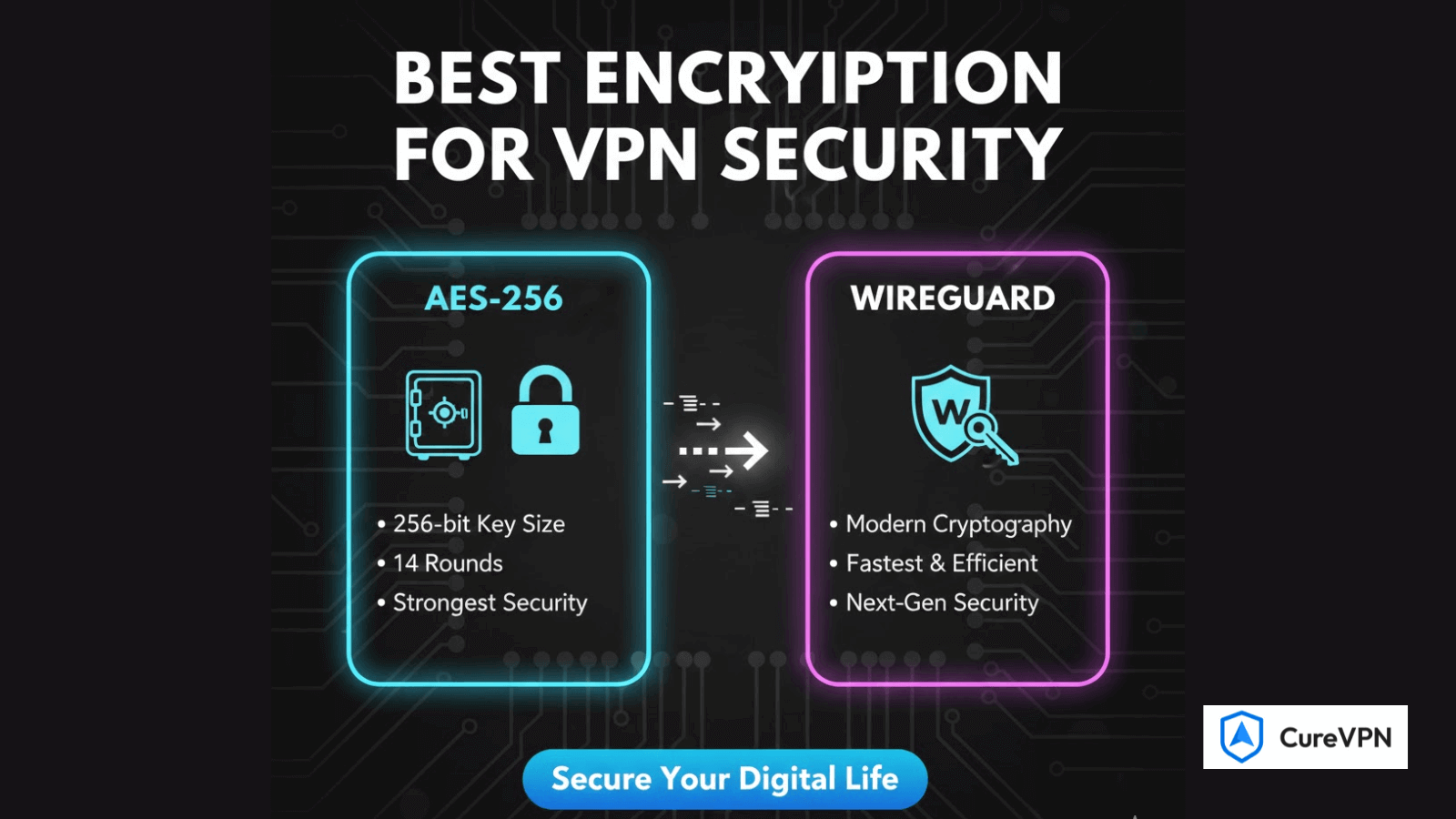
AES-256 vs AES-128: A Direct Comparison
| Feature | AES-128 | AES-256 |
|---|---|---|
| Key Length | 128 bits | 256 bits |
| Encryption Rounds | 10 | 14 |
| Security Level | Strong, practical security | Higher theoretical security |
| Performance | Faster, less CPU-intensive | Slower, more resource-heavy |
| Best Use Cases | Gaming VPNs, streaming | Banking, enterprise, sensitive data |
Sources: TechRadar, PrivacyJournal
AES-256 Encryption Security
AES-256 is often referred to as military-grade encryption. It offers a higher theoretical margin of security, making brute-force attacks practically impossible with current computing power. This makes it ideal for:
- Online banking ([How to Use a VPN for Safe Online Banking])
- Remote desktop connections
- Enterprise-level data protection
AES-128 Encryption Security
AES-128 remains unbroken and is widely considered secure. Its advantage lies in speed and efficiency, which makes it perfect for:
- Gaming VPNs (low latency)
- Streaming services ([VPN Secrets for Streaming])
- Mobile devices where battery life matters
Encryption Speed vs Security
The trade-off is clear:
- AES-128 → Faster, lightweight encryption.
- AES-256 → Maximum security, but slightly slower.
👉 For users asking “AES-256 vs AES-128, which is more secure?”, the answer is AES-256. But if you’re streaming Netflix in another country or playing Call of Duty, AES-128 may be the better choice.
Case Study: VPN Latency with AES-128 vs AES-256
A benchmark test across multiple VPN providers showed:
- AES-128 reduced latency by 15–20% compared to AES-256.
- AES-256 provided stronger encryption but introduced slight delays in high-bandwidth activities like streaming or large downloads.
This highlights the balance between lightweight encryption vs maximum security.
Practical Applications
For Streaming
- AES-128 is better for cheap Netflix country switching and [How to Use a VPN to Unblock Sites].
- AES-256 ensures privacy but may slow buffering.
For Gaming
- AES-128 is preferred for AES encryption for gaming VPNs and [How to Reduce VPN Latency].
- AES-256 is unnecessary unless handling sensitive data.
For Business
- AES-256 is ideal for the best VPN Solution for Home Network and enterprise-level security.
Long-Tail Keyword Integration
- Best VPNs for Chrome
- Best Free VPN for Call of Duty
- Best VPN for Remote Desktop
- Best Free VPNs for iPhone
- How to increase Keep2Share download speed using a VPN
Internal Linking Opportunities
- [Free VPNs for Firestick]
- [best vpn for capcut]
- [VPN vs Antivirus]
- [How to Choose The Right VPN]
FAQs
Q1: What is the best encryption for VPN security?
- AES-256 is the most secure, but AES-128 is faster and sufficient for most users.
Q2: Does AES-256 slow down VPNs?
- Yes, slightly. It requires more CPU cycles, which can increase latency.
Q3: Is AES-128 still secure in 2025?
- Absolutely. AES-128 remains unbroken and widely used in consumer VPNs.
Conclusion: Choosing the Best Encryption for VPN Security
If your priority is maximum security, AES-256 is the clear winner. But if you value speed and efficiency, AES-128 is more practical for everyday use, especially in gaming and streaming.
When choosing a VPN, consider your needs. For casual browsing and gaming, AES-128 is enough. For sensitive data protection, banking, or enterprise use, AES-256 is worth the trade-off.