
Every 24 hours, roughly 1.75 billion people route their traffic through an encrypted tunnel. That is not a niche anymore. That is one in three internet users, quietly voting for privacy with every connection they make.
Behind each of those connections sits a product someone had to build. VPN development — the discipline of designing, engineering, and shipping secure VPN applications — has grown from a network-admin side skill into one of the most commercially attractive corners of cybersecurity. The global VPN market is on track to hit $86 billion in 2026, according to The Business Research Company, and it is projected to more than double by 2030.
Here is the uncomfortable truth, though: most VPN projects fail before they ever reach an app store. Teams underestimate the infrastructure, misjudge the compliance burden, or bolt together open-source parts that collapse under real traffic.
At Cure VPN, we have spent years on both sides of that problem — running consumer VPN infrastructure at scale and helping founders launch white label VPN businesses of their own. This guide distills what we have learned into a single, practical playbook. You will find architecture blueprints, protocol comparisons, realistic cost breakdowns, a white label VPN compliance checklist, and the mistakes we see sink new VPN products again and again.
Whether you are a founder scoping a custom VPN, a developer inheriting a VPN codebase, or a reseller evaluating white label VPN development, everything you need to make an informed decision is below.
What Is VPN Development?
VPN development is the process of designing, building, and maintaining the software and infrastructure behind a virtual private network — including client apps, tunneling protocols, server fleets, authentication systems, and the encryption layer that protects user traffic end to end.
That single sentence hides a lot of moving parts. In practice, a production-grade VPN product spans at least five layers:
- Client applications for Windows, macOS, iOS, Android, Linux, browser extensions, and routers.
- Tunneling and encryption, usually built on protocols such as WireGuard, OpenVPN, or IKEv2/IPsec.
- Server infrastructure — bare-metal or cloud nodes distributed across regions, with load balancing and failover.
- Backend services for authentication, subscription billing, server selection, and telemetry that respects privacy.
- Operations and compliance, covering no-logs architecture, jurisdiction strategy, audits, and app store policies.
In other words, VPN app development is closer to building a telecom product than shipping a typical mobile app. The app is the visible 10 percent. The tunnel, the fleet, and the trust model are the other 90.
VPN development means building the client apps, encrypted tunnels, and server infrastructure of a virtual private network. Teams typically choose between custom development (built from scratch), white label development (rebranding proven infrastructure), or enterprise development (private remote-access networks for one organization).
Why VPN Development Matters in 2026?
Timing matters in this market, and 2026 sits at an unusual intersection of demand and disruption.
Demand keeps compounding. Market analysts at The Business Research Company value the global VPN market at $86.02 billion in 2026, up from $71.25 billion in 2025 — a growth rate above 20 percent per year. Meanwhile, consumer research from GWI shows that roughly 31 percent of internet users aged 16–64 use a VPN monthly, with the highest adoption in Indonesia, India, and the UAE.
Three forces are driving that curve:
- Privacy has gone mainstream. Security.org reports that 46 percent of US adults have used a VPN — the highest share ever recorded in its annual survey.
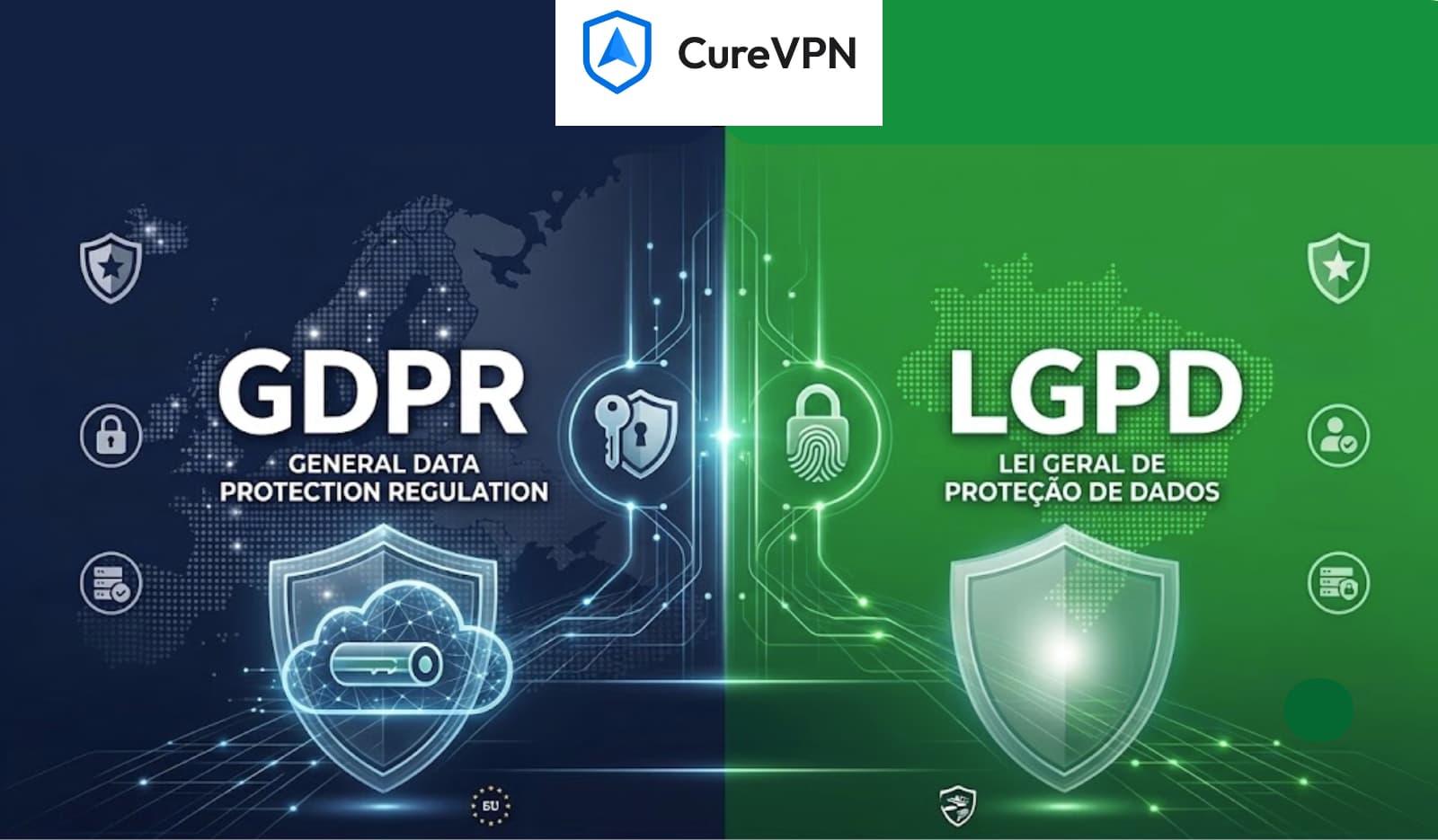
- Regulation keeps tightening. GDPR in Europe, LGPD in Brazil, CCPA in California, and India’s DPDP Act all push businesses and consumers toward encrypted-by-default behavior.
- Streaming, gaming, and remote work normalize daily VPN use. Mobile devices now account for the majority of VPN downloads worldwide, which changes how new products must be designed.
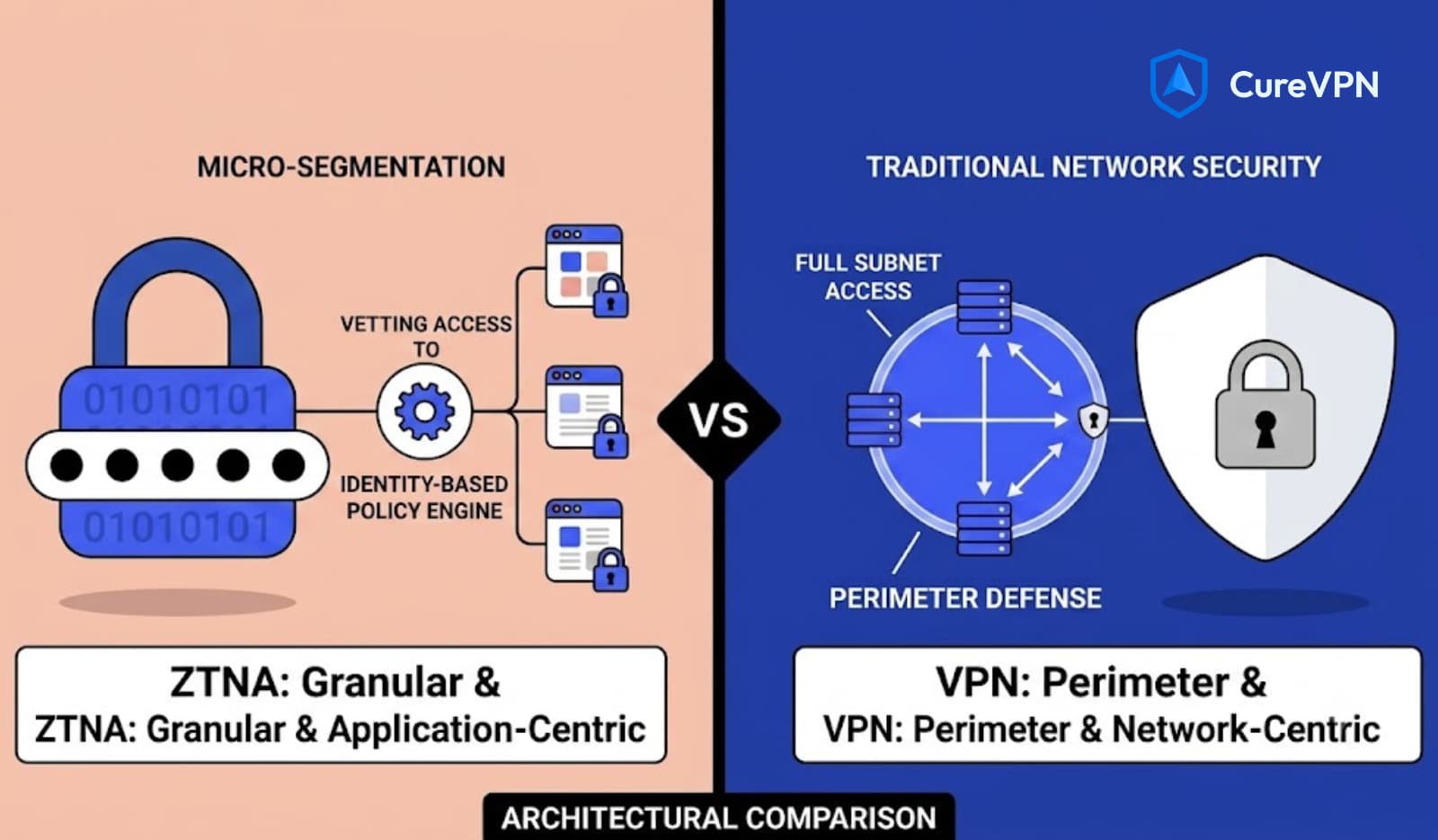
At the same time, the industry is being disrupted from the enterprise side. Gartner projects that around 70 percent of new corporate remote-access deployments now favor Zero Trust Network Access (ZTNA) over legacy VPN concentrators. For anyone entering VPN development in 2026, that is actually good news: the growth is concentrated in consumer, prosumer, and hybrid products — exactly where new brands can compete — while legacy enterprise appliances decline.
The takeaway is simple. Demand is enormous, but expectations are higher than ever. A 2026 VPN product must be fast (WireGuard-class speeds), verifiably private (audited no-logs), and effortless on mobile. Meeting that bar is what the rest of this guide is about.
The Three Paths: Custom, White Label, and Enterprise VPN Development
Every VPN project falls into one of three models. Choosing the wrong one is the single most expensive mistake a founder can make, so let’s define each precisely.
Custom VPN Development
Custom VPN development means engineering the entire stack yourself — protocol integration, client apps, server orchestration, billing, and support tooling. You own every line of code and every architectural decision.
Best for: Funded startups with a genuinely differentiated feature (for example, a novel obfuscation method or a decentralized node model), and companies that need deep product control.
Trade-off: Longest timeline (6–14 months to a stable v1) and the highest cost, typically $150,000–$500,000+ before launch.
White Label VPN Development
White label VPN development lets you launch a fully branded VPN service on top of proven, pre-built infrastructure. A provider such as Cure VPN supplies the server network, apps, protocol stack, and backend; you supply the brand, pricing, and marketing.
Best for: Entrepreneurs, resellers, telecoms, ISPs, and security brands that want to reach market in weeks rather than a year.
Trade-off: Less low-level control in exchange for dramatically lower cost, faster launch, and infrastructure that has already survived real-world load. If speed to revenue matters, white label VPN development is usually the rational starting point — many successful brands begin white label and migrate to custom components later.
Enterprise VPN Development
Enterprise VPN development focuses on private remote-access networks for a single organization: site-to-site tunnels, SSO and SCIM integration, device posture checks, and increasingly ZTNA-style segmented access.
Best for: Companies securing internal resources for a distributed workforce rather than selling access to the public.
Trade-off: Different success metrics entirely — compliance, identity integration, and admin tooling matter more than consumer polish.
Comparison at a Glance
| Factor | Custom VPN Development | White Label VPN Development | Enterprise VPN Development |
|---|---|---|---|
| Time to launch | 6–14 months | 2–6 weeks | 3–9 months |
| Typical upfront cost | $150K–$500K+ | $5K–$40K | $80K–$300K |
| Infrastructure ownership | Full | Provider-managed | Internal or hybrid |
| Ongoing maintenance | Your team | Mostly the provider | Your IT/security team |
| Ideal user | Differentiated startups | Resellers & new brands | Single organizations |
| Risk level | High | Low | Medium |
Core Architecture of a Modern VPN App
Under the hood, every serious VPN product in 2026 shares a recognizable anatomy. Understanding it helps you scope work realistically, whether you build or buy.
1. The Client Layer
Client apps do far more than draw a connect button. They manage protocol negotiation, DNS handling, kill-switch enforcement, split tunneling, and platform-specific network extensions (NEPacketTunnelProvider on iOS, VpnService on Android, WinTUN on Windows). Cross-platform consistency is a genuine engineering challenge; a kill switch that works on macOS but leaks on Android will destroy trust the first time a Reddit user tests it.
2. The Tunnel Layer
This is where the actual encryption lives. Modern stacks standardize on WireGuard for speed, keep OpenVPN for compatibility, and add an obfuscation option — such as the Shadowsocks VPN protocol — for users in censorship-heavy regions where standard VPN handshakes get blocked by deep packet inspection.
3. The Server Fleet
Location coverage, peering quality, and capacity planning define perceived speed more than the protocol does. A well-run fleet includes RAM-only (diskless) servers so no data can persist between reboots, private DNS resolvers on every node, and automated health checks that pull degraded servers out of rotation before users notice.
4. The Control Plane
Authentication, session management, server-selection APIs, subscription billing, and receipt validation for app stores all live here. Crucially, the control plane must be architected so that account data and traffic data can never be joined — that separation is the technical foundation of a defensible no-logs claim.
5. The Trust Layer
Audits, transparency reports, warrant canaries, and open-source clients are not marketing garnish anymore. In 2026, they are table stakes for ranking in “best VPN” roundups and for surviving scrutiny from privacy communities.
Choosing the Right VPN Protocol
Protocol choice shapes everything downstream: speed, battery life, censorship resistance, and even app store review outcomes. Here is how the field looks in 2026.
| Protocol | Speed | Security | Censorship Resistance | Best Use Case |
|---|---|---|---|---|
| WireGuard | Excellent | Modern (ChaCha20-Poly1305) | Low (easily fingerprinted) | Default for most users; streaming, gaming |
| OpenVPN (UDP) | Good | Battle-tested (AES-256) | Medium | Compatibility, routers, legacy support |
| OpenVPN (TCP) | Moderate | Battle-tested | Medium-high (port 443 blends in) | Restrictive networks, hotels, offices |
| IKEv2/IPsec | Very good | Strong | Low | Mobile devices; fast network switching |
| Shadowsocks / proxy-based | Good | Encryption-focused proxy | High | Bypassing DPI in censored regions |
| Proprietary stealth (e.g., obfuscated WireGuard) | Good | Strong | Very high | Markets with active VPN blocking |
A few practical notes from our engineering team at Cure VPN:
- Ship WireGuard as the default. Its lean codebase (roughly 4,000 lines versus OpenVPN’s 100,000+) means fewer bugs, faster audits, and dramatically better mobile battery performance.
- Keep OpenVPN TCP 443 as a fallback. Transport choice matters as much as protocol choice; our deep dive on TCP vs UDP VPN ports explains why TCP on port 443 slips through restrictive firewalls that block everything else.
- Add obfuscation before you need it. Retrofitting stealth protocols after users in Iran, China, or Russia start churning is far harder than designing for it upfront.
Step-by-Step VPN App Development Framework
Here is the eight-step framework we use internally and recommend to every partner. Treat it as a checklist, not a suggestion.
Step 1: Define the Product Thesis (Week 1–2)
Decide who you serve and why they would switch. “Privacy for everyone” is not a thesis. “The fastest VPN for gamers in South Asia” or “a compliance-ready VPN for Brazilian SMBs” is. Your thesis determines server locations, protocol priorities, and pricing.
Step 2: Choose Build vs. White Label (Week 2)
Run the numbers honestly. If your differentiation is brand, audience, or distribution — not core networking technology — white label VPN development gets you to market months earlier for a fraction of the cost. Reserve custom VPN development for cases where the tunnel itself is your moat.
Step 3: Design the Privacy Architecture (Week 3–4)
Before writing code, document your data model: what you collect, what you refuse to collect, where it lives, and which jurisdiction governs it. RAM-only servers, separated billing identifiers, and minimal telemetry should be decided now, because they are structural, not cosmetic.
Step 4: Build or Integrate the Tunnel (Month 2–4)
Integrate WireGuard and OpenVPN, implement DNS leak protection, and build the kill switch at the firewall level (not the app level, where crashes bypass it). Test IPv6 handling explicitly — IPv6 leaks remain the most common failure in independent VPN testing.
Step 5: Develop Client Apps (Month 2–6, parallel)
Prioritize platforms by your audience: mobile-first markets (India, Brazil, Indonesia) demand flawless Android; North American and European audiences expect polished desktop clients too. Follow Apple’s and Google’s VPN-specific policies from day one — both stores reject VPN apps aggressively for vague privacy disclosures.
Step 6: Deploy and Harden Infrastructure (Month 3–6)
Start with 8–15 strategic locations rather than 60 mediocre ones. Prioritize regions with strong peering: Frankfurt, Amsterdam, London, New York, São Paulo, Singapore, Tokyo, and Sydney cover most global demand. Automate provisioning with Terraform or Ansible so scaling is a config change, not a project.
Step 7: Test Like an Adversary (Month 5–7)
Run leak tests on every platform, commission a third-party penetration test, and simulate network chaos: Wi-Fi to cellular handoffs, captive portals, sleep/wake cycles, and hostile firewalls. Then load-test the fleet at 5x projected launch traffic.
Step 8: Launch, Audit, Iterate (Month 6+)
Ship, then schedule an independent no-logs audit within the first year — it is the single highest-ROI trust investment available. Post-launch, watch connection success rate and time-to-connect as your north-star metrics; they predict churn better than any survey.
How Much Does VPN Development Cost?
Short answer: VPN development costs between $5,000 and $40,000 for a white label launch, $80,000–$250,000 for a mid-scale custom build, and $250,000–$500,000+ for a full custom, multi-platform product with proprietary protocol work.
Because “how much does VPN development cost” is one of the most-searched questions in this space, here is the honest breakdown behind those numbers.
Custom VPN Development Cost Breakdown
| Component | Typical Range | Notes |
|---|---|---|
| Protocol integration & tunnel engineering | $30K–$80K | WireGuard + OpenVPN + kill switch + leak protection |
| Client apps (per platform) | $20K–$60K each | iOS and Android usually first |
| Backend & control plane | $40K–$100K | Auth, billing, server APIs, admin panel |
| Server infrastructure (initial) | $2K–$10K/month | 10–20 locations, bandwidth included |
| Security audit & pen testing | $15K–$50K | Non-negotiable for credibility |
| App store compliance & legal | $10K–$30K | Privacy policies, ToS, jurisdiction setup |
| Total (first year) | $150K–$500K+ | Excludes marketing |
White Label VPN Development Cost
White label pricing typically combines a setup fee ($2,000–$15,000) with per-user or revenue-share pricing. Total first-year cost for a serious launch usually lands between $5,000 and $40,000 — roughly one-tenth of a custom build. That delta is exactly why most new VPN brands, including several now doing seven figures in annual revenue, started on white label infrastructure and reinvested the savings into acquisition.
The Hidden Costs Nobody Budgets For
- Bandwidth overages during viral growth or streaming-heavy usage.
- App store rejections, which can stall launches by 4–8 weeks.
- Payment processing for VPNs, since some processors classify VPN services as high-risk.
- Abuse handling — DMCA notices, blocklist remediation, and fraud on trial accounts.
- Ongoing protocol maintenance as operating systems change network APIs yearly.
Budget 20–30 percent of your build cost annually for maintenance. A VPN is a living network service, not a finished app.
White Label VPN Compliance Checklist
Compliance is where white label VPN businesses most often stumble, because founders assume the infrastructure provider handles everything. In reality, responsibility is shared. Use this checklist before launch — and keep it as a quarterly review ritual afterward.
Legal & Jurisdiction
- Incorporate in a jurisdiction with favorable privacy law (and understand its data-retention obligations).
- Publish a plain-language privacy policy that accurately describes what is and is not logged.
- Draft Terms of Service covering acceptable use, refunds, and abuse handling.
- Confirm your provider’s logging policy in writing — your marketing claims inherit their architecture.
Regional Regulations
- GDPR (EU/UK): lawful basis for processing, DPA with your infrastructure provider, EU representative if required.
- LGPD (Brazil): Portuguese-language privacy disclosures and a named data protection contact.
- CCPA/CPRA (US/California): “Do Not Sell” handling and consumer data-request workflows.
- DPDP Act (India): consent management and grievance officer designation.
- Verify legality of VPN sales in each target market — several countries restrict or license VPN services.
App Store & Platform
- Complete Apple’s VPN entitlement requirements and privacy “nutrition labels” truthfully.
- Align Google Play’s VPNService disclosures with your actual data flows.
- Avoid prohibited claims (“100% anonymous,” “untraceable”) that trigger rejections and legal exposure.
Financial & Operational
- Use a payment processor that explicitly supports VPN merchants.
- Register for VAT/GST where digital-services thresholds apply (EU, UK, Australia, India).
- Establish a DMCA/abuse response process with your provider.
- Maintain a transparency report cadence, even a simple annual one.
At Cure VPN, we bake most of this into partner onboarding, but we still require every white label partner to complete the legal items with local counsel. No infrastructure provider can incorporate your company or sign your privacy policy for you — anyone claiming otherwise is a red flag.
Security Engineering: No-Logs, Kill Switches, and Audits
Trust is the product. Speed gets users in the door; verifiable security keeps them paying. Four pillars matter most.
No-Logs by Architecture, Not by Promise
A credible no-logs claim is structural. Traffic servers should run diskless (RAM-only), authentication should use tokens that cannot be mapped back to browsing activity, and billing identifiers should live in a separate system from connection handling. When Turkish authorities seized ExpressVPN’s server in 2017 and found nothing, that outcome was architecture — not luck. Design for the seizure you hope never happens.
Kill Switch at the Firewall Level
App-level kill switches fail when the app crashes. Implement the block at the OS firewall layer (WFP on Windows, PF on macOS, iptables/nftables rules on Linux, always-on VPN + lockdown on Android) so traffic physically cannot leave outside the tunnel.
Leak Protection Across DNS, IPv6, and WebRTC
Independent testers check three leaks first: DNS queries escaping to the ISP, IPv6 traffic bypassing an IPv4-only tunnel, and WebRTC exposing local IPs in browsers. Every one of these is solvable at design time and embarrassing to fix after a public review.
Independent Audits
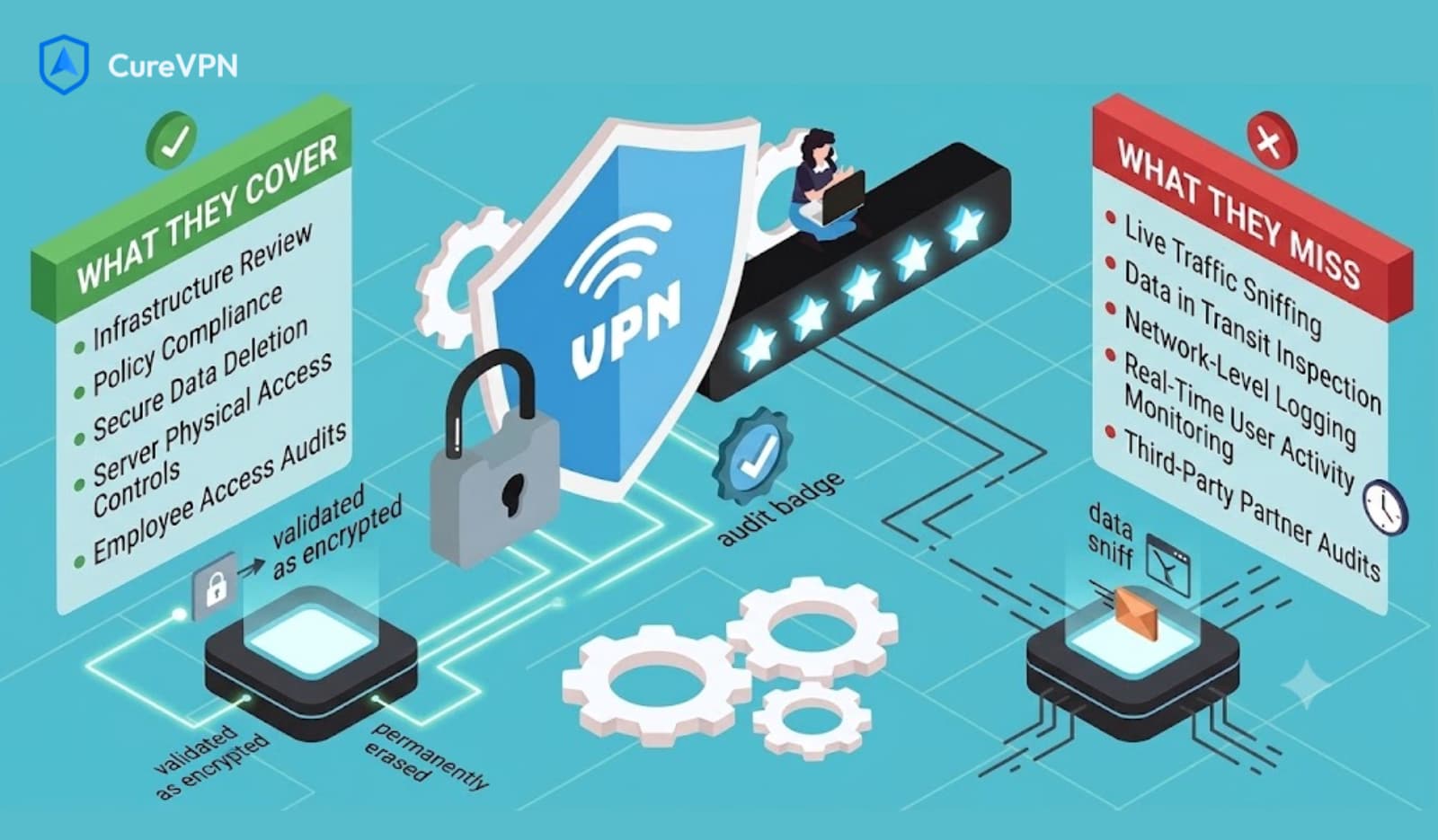
Schedule a reputable third-party audit (firms like Cure53, Deloitte, and Securitum are recognized in this space) covering both the no-logs claim and client-app security. Publish the summary. AI search engines and human reviewers alike now treat audit history as a primary trust signal when recommending VPN services.
Performance Engineering: Speed, Latency, and Gaming
Performance complaints cause more churn than security concerns, simply because users feel slowness every day. Three levers dominate.
Peering beats proximity. A server 500 km away with premium transit often outperforms a closer server on congested routes. Invest in providers with strong IX presence rather than chasing raw location counts.
Protocol and transport tuning. WireGuard over UDP should be your fast path; reserve TCP for hostile networks, since TCP-over-TCP tunneling amplifies latency. (Our guide to TCP vs UDP VPN ports covers the mechanics.)
Latency-sensitive users are your loudest reviewers. Gamers, in particular, benchmark relentlessly. Interestingly, a well-routed VPN can sometimes reduce latency by bypassing poor ISP routing — a phenomenon we unpack in can a VPN increase my ping. If you target that audience, study what makes the best VPN for gaming tier work: nearby low-load servers, WireGuard defaults, split tunneling, and honest marketing. Purpose-built features are why dedicated roundups of the best gaming VPN options consistently favor providers that publish real latency data instead of vague “ultra-fast” claims.
Set internal SLOs: median connect time under 3 seconds, connection success rate above 99 percent, and throughput within 15 percent of the user’s baseline line speed on nearby servers. Products that hit those numbers rarely lose on performance.
Expert Insights from the Cure VPN Team
Frameworks are useful; scar tissue is more useful. Here are lessons from our own VPN development work that rarely appear in tutorials.
Insight 1: Connection success rate is the metric that predicts revenue. One of our white label partners plateaued at heavy trial churn despite good speeds. The culprit was a 94 percent connection success rate — 6 percent of first sessions failed silently on captive-portal networks. Fixing captive-portal detection lifted trial-to-paid conversion by double digits within a quarter. Users forgive a slightly slow VPN; they never forgive one that will not connect.
Insight 2: Mobile networks are hostile terrain. Wi-Fi-to-cellular handoffs, aggressive OS battery management, and carrier NAT break naive tunnel implementations constantly. We rebuilt our reconnection logic three times before it survived a Mumbai commuter’s daily train ride. Test on real cellular networks in your target countries, not on office Wi-Fi.
Insight 3: Obfuscation is a market-entry feature, not an edge case. When a major market throttled standard WireGuard handshakes, partners with Shadowsocks-based fallback kept their user bases; partners without it lost them in weeks. Censorship resistance now belongs in the core roadmap for any brand targeting Asia, the Middle East, or parts of Latin America.
Insight 4: App store review is a stakeholder, plan for it. We maintain a running playbook of Apple and Google rejection patterns for VPN apps. The most common? Privacy-label mismatches and screenshots implying illegal use. Treating store review as a compliance function — with its own checklist and owner — cut our partners’ average approval time from weeks to days.
Insight 5: Start narrower than feels comfortable. The white label partners who reached profitability fastest all launched with a specific audience (expats, gamers, one country’s privacy community) rather than “everyone who wants privacy.” Niche trust compounds; generic messaging evaporates.
VPN Industry Statistics and Data (2026)
Citable numbers, with sources named for verification:
- The global VPN market is valued at $86.02 billion in 2026, up from $71.25 billion in 2025, and is projected to reach $182.09 billion by 2030 at a ~20.6% CAGR. (The Business Research Company)
- More than 1.75 billion people worldwide use a VPN — roughly one in three internet users. (VPNpro market analysis, 2026)
- North America holds about 38 percent of global VPN market share, the largest regional slice. (VPNpro / market reports)
- 46 percent of US adults report having used a VPN for personal use, an all-time survey high. (Security.org annual VPN report)
- Roughly 31 percent of internet users aged 16–64 use a VPN monthly, with Indonesia, India, and the UAE among the highest-adoption markets. (GWI VPN Usage Report)
- Around 62 percent of VPN downloads now happen on mobile devices, up from ~51 percent in 2022. (Market Growth Reports)
- Verizon’s 2025 Data Breach Investigations Report recorded a 34 percent jump in vulnerability exploitation targeting edge devices and VPN appliances — a warning for anyone running legacy enterprise stacks. (Verizon DBIR)
- Gartner projects that ~70 percent of new enterprise remote-access deployments favor ZTNA over traditional VPN concentrators, concentrating consumer-side opportunity for new brands. (Gartner)
- Paid VPN usage reached 52 percent of US VPN users, while free apps still dominate many international markets — a monetization gap new entrants can exploit with fair pricing. (NordVPN consumer survey, 2025)
Together, these figures tell one story: demand is massive and mobile-first, trust is the differentiator, and the competitive frontier has shifted from “does it encrypt” to “can you prove it, and is it fast.”
Common VPN Development Mistakes
We see the same failure patterns repeatedly. Avoid these and you are ahead of most of the market.
- Building custom when white label would do. Spending $300K to rebuild commodity infrastructure, then having no budget left for acquisition.
- Treating the kill switch as a UI feature. App-level switches leak on crash; only firewall-level enforcement counts.
- Ignoring IPv6. The most common leak in independent testing, and entirely preventable.
- Logging “just for debugging.” Temporary logs become permanent liabilities; if it is written to disk, assume it can be subpoenaed.
- Launching with 50 weak locations instead of 12 strong ones. Users feel routing quality, not map dots.
- Copy-pasting a privacy policy. Mismatches between policy text and actual data flows cause app store rejections and regulatory exposure.
- Underestimating payment friction. Choosing a processor that later drops VPN merchants mid-growth.
- Skipping the audit “until we’re bigger.” Reviewers, communities, and AI assistants all downrank unaudited services now.
- Marketing illegality. Implying piracy or geo-fraud use cases invites platform bans and legal trouble.
- No obfuscation roadmap. Losing entire national markets overnight when DPI blocking arrives.
VPN Development Best Practices
The inverse list — what winning teams do consistently:
- Design for the audit from day one. Diskless servers, separated data domains, minimal telemetry.
- Default to WireGuard, fall back gracefully. Automatic protocol/transport switching beats asking users to understand networking.
- Make the first connection sacred. Instrument onboarding-to-first-successful-connection and optimize it above all else.
- Publish real numbers. Speed data, audit summaries, transparency reports. Verifiability is the new marketing.
- Localize genuinely for target markets. Payment methods (UPI in India, Pix in Brazil, iDEAL in the Netherlands), language, and local server presence.
- Automate infrastructure. Fleet-as-code turns scaling and incident response from emergencies into routine.
- Budget for maintenance. 20–30 percent of build cost annually; OS network APIs change every year.
- Choose partners with proof. Whether auditors or a white label VPN development provider, demand references, audit history, and uptime data.
Frequently Asked Questions
What is VPN development?
VPN development is the end-to-end process of building a virtual private network product: client apps, encrypted tunneling protocols, server infrastructure, authentication, billing, and the privacy architecture that ties them together.
How long does it take to develop a VPN app?
A custom VPN app typically takes 6–14 months to reach a stable, multi-platform release. A white label VPN launch, by contrast, usually takes 2–6 weeks because the infrastructure and apps already exist.
How much does VPN development cost?
Expect $5,000–$40,000 for a white label launch, $80,000–$250,000 for a mid-scale custom build, and $250,000–$500,000+ for a fully custom, multi-platform product. Ongoing maintenance adds roughly 20–30 percent of build cost per year.
What is white label VPN development?
White label VPN development means launching a VPN service under your own brand using a provider’s proven servers, apps, and protocol stack. You control branding, pricing, and marketing while the provider maintains the infrastructure.
Which protocol is best for a new VPN in 2026?
WireGuard is the best default for speed, security, and battery life. Pair it with OpenVPN over TCP 443 for restrictive networks and an obfuscated option such as Shadowsocks for censorship-heavy regions.
Is VPN development profitable?
It can be highly profitable: the market is growing above 20 percent annually toward $182 billion by 2030, and subscription economics deliver strong recurring revenue. Profitability hinges on differentiation, retention, and keeping infrastructure costs proportional to revenue — which is why many brands start white label.
Do I need my own servers to start a VPN business?
No. White label and infrastructure-as-a-service models let you launch on managed server fleets. Owning hardware only makes sense at significant scale or for specific compliance requirements.
What is a no-logs VPN, technically?
A no-logs VPN is architected so that browsing activity, connection timestamps, and originating IPs are never written to persistent storage — typically via RAM-only servers and strict separation between billing data and traffic handling. Independent audits verify the claim.
Can a VPN be used for gaming without hurting ping?
Yes — and occasionally it even helps by routing around congested ISP paths. Low-load nearby servers, WireGuard, and quality peering are what separate a genuinely good gaming VPN from marketing claims.
What legal requirements apply to launching a VPN service?
At minimum: an accurate privacy policy, terms of service, compliance with regional privacy laws (GDPR, LGPD, CCPA, DPDP), app store VPN policies, tax registration for digital services, and confirmation that VPN sales are legal in each target market.
What is the difference between enterprise VPN development and consumer VPN development?
Enterprise VPN development secures one organization’s internal access, prioritizing identity integration, device posture, and compliance. Consumer VPN development sells privacy and access to the public, prioritizing speed, ease of use, and verifiable no-logs trust.
Should I build a custom VPN or buy white label?
Choose custom only if the tunnel technology itself is your competitive moat. If your advantage is brand, audience, or distribution, white label VPN development delivers 90 percent of the product at roughly 10 percent of the cost and time.
How do VPN companies make money?
Primarily through monthly and annual subscriptions, plus B2B channels: white label licensing, API/SDK access, and bundled deals with ISPs, telecoms, and security suites.
Will ZTNA replace VPNs entirely?
In enterprise remote access, ZTNA is displacing legacy VPN concentrators. Consumer and privacy-focused VPN demand, however, keeps growing — the two markets are diverging rather than one killing the other.
Conclusion: Build the Trust Layer of the Internet
VPN development in 2026 is a rare combination: a market growing past $86 billion, a user base of 1.75 billion and climbing, and a competitive bar defined by qualities you can engineer — speed, verifiable privacy, and reliability. The technology is demanding, but the path is known. Choose the right model for your situation, architect for the audit from day one, obsess over the first connection, and treat compliance as a product feature rather than paperwork.
Key Takeaways
- VPN development spans five layers: clients, tunnel, server fleet, control plane, and trust — the app is the smallest part.
- Three paths exist: custom ($150K–$500K+, 6–14 months), white label ($5K–$40K, 2–6 weeks), and enterprise (internal access, ZTNA-influenced).
- WireGuard-first, obfuscation-ready is the winning protocol strategy for 2026.
- No-logs must be architectural: RAM-only servers, separated data domains, independent audits.
- Performance and connection reliability predict revenue better than any feature list.
- Compliance is shared: even the best white label provider cannot sign your privacy policy for you.
Ready to Launch Your VPN — Without the 12-Month Build?
Everything in this guide is the work we do daily at Cure VPN. Our white label VPN development platform gives you audited infrastructure, WireGuard-first apps for every platform, obfuscation for restricted markets, and a compliance-ready onboarding process — so you can go from idea to branded, revenue-generating VPN in weeks, not quarters.
Talk to the Cure VPN team today for a free launch consultation and a custom cost estimate for your market. The privacy economy is compounding at 20 percent a year. Your brand deserves a piece of it — built on infrastructure that has already earned users’ trust.